

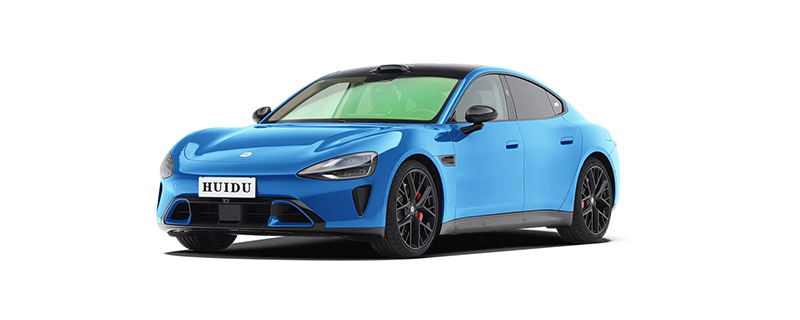
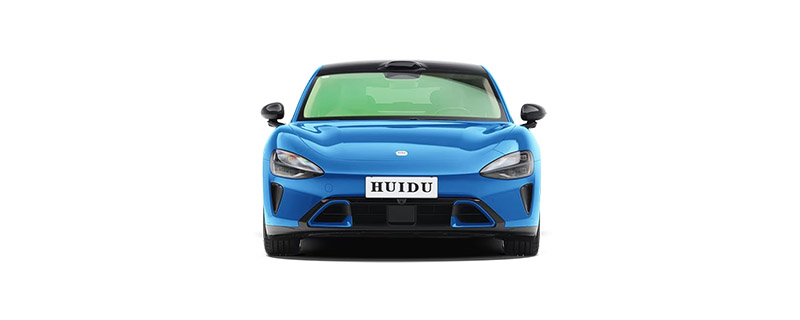
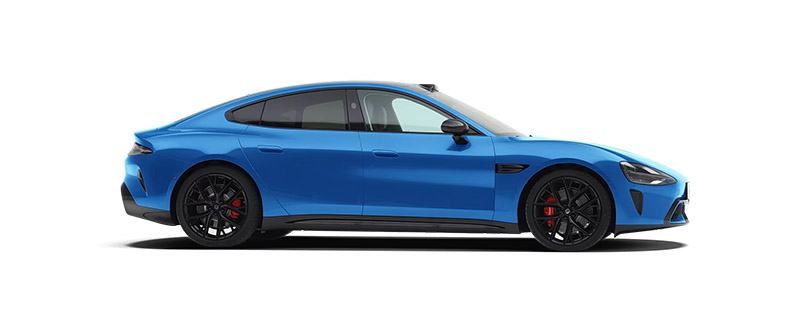
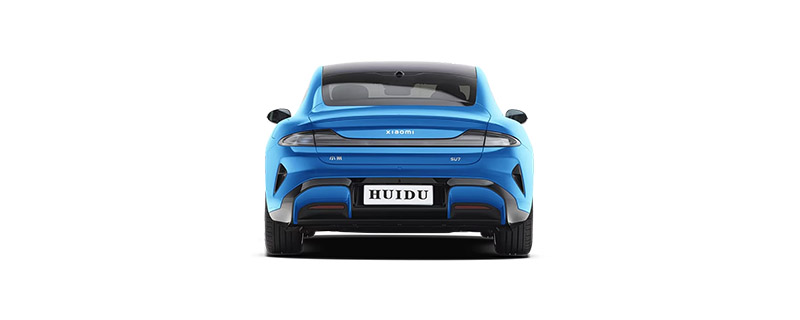
On March 19, 2026, the next-generation Xiaomi SU7 officially launched in three trims: Standard Edition (RMB 219,900), Pro Edition (RMB 249,900), and Max Edition (RMB 303,900). Within 48 days of market launch, locked orders surpassed 80,000 units, despite a modest RMB 4,000 price increase over its predecessor. The defining hallmark of this generation – standard LiDAR across all trims, standard HAD (Xiaomi Pilot), and standard rear side airbags – is the sharpest blade carving out its niche in the crowded RMB 300,000-class electric sedan segment.
The new Xiaomi SU7 features a fundamental bottom‑up upgrade – a full‑voltage 800V architecture. The Standard Edition rides on a 752V high‑voltage platform, delivering a CLTC range of 720 km; the Max Edition adopts an 897V near‑900V platform with a CLTC range of 835 km. All variants come with the standard V6s Plus high‑performance e‑motor, producing 320 hp on the Standard and Pro trims, and an exhilarating 690 hp on the Max trim. In testing, the Max hits 0-100 km/h in 3.08 seconds and a top speed of 265 km/h. Paired with a 5.2C peak charging rate, a 10%-80% fast charge takes just 12 minutes.
The unavoidable benchmark remains the Tesla Model 3 Highland. The Model 3 Long Range RWD now achieves a WLTP range of 711 km, while the Performance variant delivers 0-100 km/h in 3.1 seconds and a combined 460 hp. Tesla’s energy management, honed through continuous OTA updates, remains the golden reference point for Chinese consumers when comparing pricing. Yet the fundamental philosophical divergence lies here: the Xiaomi SU7 aspires to be the central hub of the “Human x Car x Home” smart ecosystem, whereas the Model 3 stays true to the purist, analog-focused electric driving experience.
“The new Xiaomi SU7 incorporates over 100 upgrades, with raw material costs alone rising by nearly RMB 20,000. However, given the phase‑out of the purchase tax incentive, we didn’t want to push the burden onto our customers.” – Lei Jun, Chairman of Xiaomi Group.
The chassis determines whether the Xiaomi SU7 is merely a fast car or a genuinely rewarding driver’s car. The new Xiaomi SU7 rides on Xiaomi’s brand‑new “Jiaolong” chassis – a deeply integrated, high‑performance intelligent chassis system that Lei Jun says is “designed for the driver.” Standard hardware includes front double‑wishbone and rear five‑link independent suspension. The Pro and Max trims further feature closed‑loop dual‑chamber air springs and CDC variable‑damping shock absorbers. In Comfort mode, the ride delivers an advanced, resilient quality; in Sport mode, the chassis instantly tightens – suspension stiffness can be varied by up to 42%, delivering decisive roll suppression. After 40 to 45 consecutive 100-0 km/h panic stops, braking performance shows no significant fade. The 265 mm rear tires increase contact patch by 8%, and a new wet‑surface slip control system improves driving stability on slippery roads by 30%.
The Tesla Model 3’s chassis tuning remains a benchmark of precision. However, the Highland Model 3 has moved toward a softer damper calibration, with noticeably more forgiving bump absorption, but its razor‑sharp dynamic edge is less fierce than before. Braking wise, the Performance model stops from 100-0 km/h in approximately 34 meters, but its thermal stability under repeated hard braking – an area where Xiaomi SU7 aims to excel – has room to catch up.
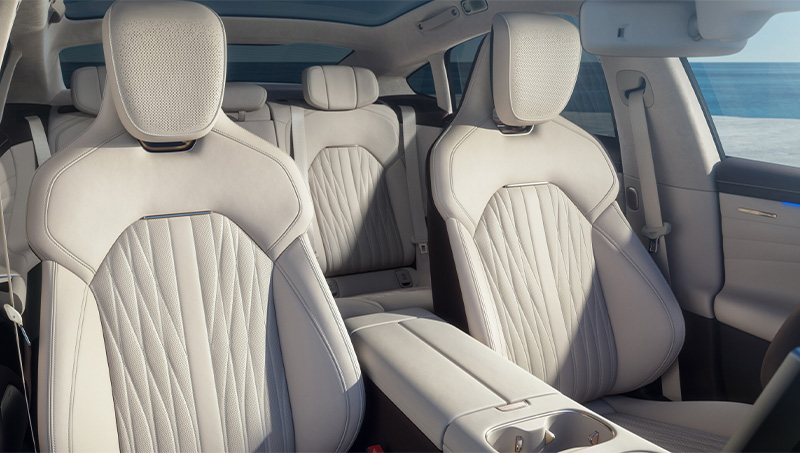
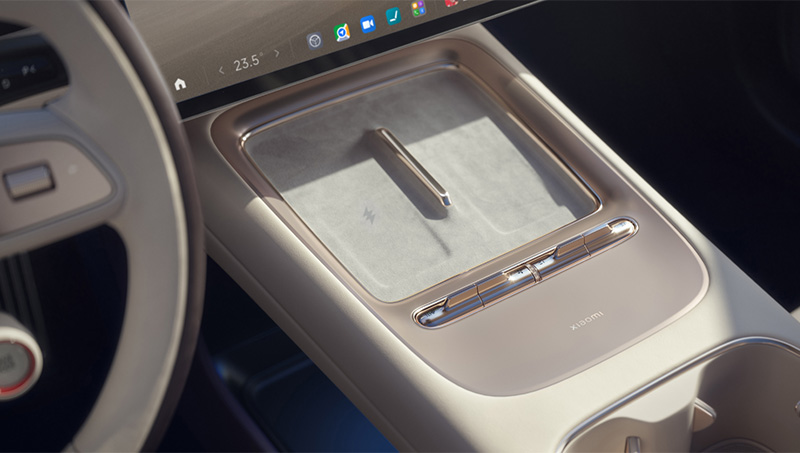
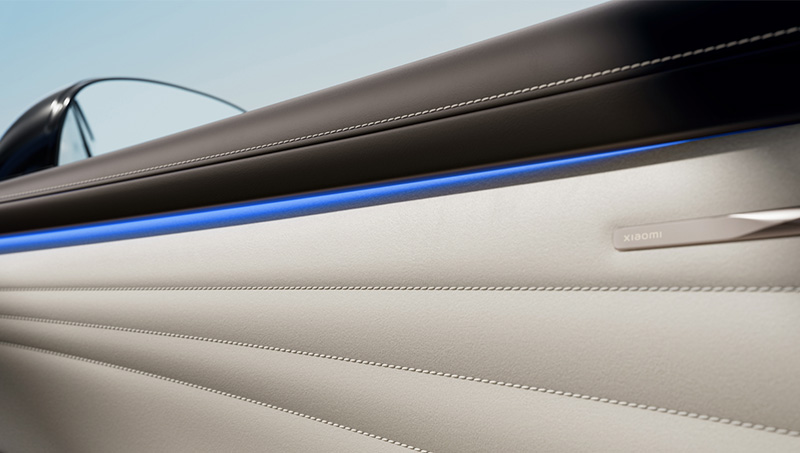
Inside, the Xiaomi SU7 runs a deeply customized HyperOS based on the Snapdragon 8295 chip, achieving cold boot in just 0.3 seconds. The “Super XiaoAi” voice assistant covers 95% of vehicle control functions, adding features like emotional perception, fuzzy‑semantic navigation, and exterior voice recognition. Standard across all trims: nine airbags (including rear side airbags), plus 2,200 MPa hot‑formed steel and an integrated roll cage. The Model 3’s 15.4‑inch central screen and its operating logic are top‑notch, but voice control is limited to a long‑press button on the steering wheel. The rear 8‑inch touchscreen is exclusive to the Highland version. Overall, Tesla falls far short of the Xiaomi SU7 in ecosystem integration and cabin luxury.
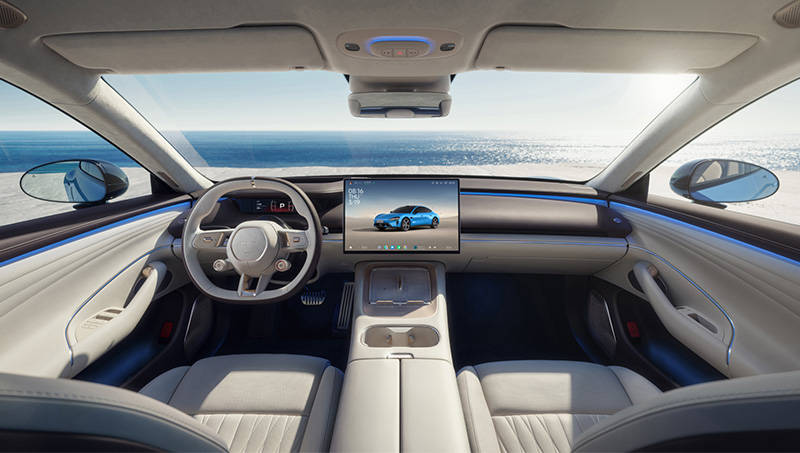
This is where the new Xiaomi SU7 delivers a generational blow – and the most frightening advantage over rivals: standard LiDAR, 4D millimeter‑wave radar, and a 700 TOPS NVIDIA Thor-U chip across all trims, together with free‑for‑life HAD (Xiaomi Pilot) assisted driving. Built on Xiaomi’s XLA cognitive foundation model, the multimodal fusion perception framework already enables voice‑controlled vehicle functions and valet parking at commercial garages. In contrast, the Model 3 relies on a vision‑only solution, offering basic Level 2 ADAS. Tesla requires a RMB 32,000 option for Enhanced Autopilot (EAP) as the entry ticket to urban navigation.
“Sit inside the Xiaomi SU7, and you immediately feel Xiaomi’s accumulated strength in software‑hardware integration. The Model 3, by contrast, is about ‘accessing the beauty of autonomous driving at the lowest possible threshold.’” – Li Yan, Editor‑in‑Chief, Drive‑Style.
The new Xiaomi SU7 has a kerb weight of approximately 2.28 tons and a 100-0 km/h braking distance of 33.3 meters. At nearly five meters long, this mid‑large electric sedan offers top‑tier rear legroom among its peers, though the fastback roofline leaves only a fist’s worth of headroom – comfortable for occupants under 1.85 m. The Pro long‑range variant has proven its mettle in real‑world Beijing‑Shanghai expressway range challenges, where its solid baseline range and access to the 800V fast‑charging network make daily commutes and long trips seamlessly navigable. The Model 3 Highland’s WLTP range has improved to 711 km, and its energy efficiency is second to none. However, its fast‑charging speed and the 800V ecosystem have fallen noticeably behind those of domestic rivals. Rear seat space remains merely “adequate” for its size class, far from optimal for primary family use.
1. What kind of car is the 2026 Xiaomi SU7?
The 2026 Xiaomi SU7 is a mid‑large intelligent electric sedan built on Xiaomi’s V6s Plus e‑motor and a full‑silicon‑carbide high‑voltage platform. Positioned as a “driver’s car,” it delivers comprehensive upgrades in intelligence and luxury, underscored by standard LiDAR, dual‑chamber air suspension, and full‑scope HAD assisted driving.
2. What are the core differentiators of the new Xiaomi SU7?
Its core differentiators lie in standard advanced driving hardware across all trims:
① 700 TOPS NVIDIA Thor‑U + LiDAR + 4D mmWave radar + 11 cameras;
② Standard closed‑loop dual‑chamber air springs + CDC on Pro/Max trims;
③ CLTC max range 902 km – Max trim with 897V near‑900V platform delivers 670 km in 15 min;
④ XIAOMI XLA cognitive foundation model, enabling full‑scenario urban NOA.
3. How to choose between the Tesla Model 3 Highland and the new Xiaomi SU7?
Autonomous Driving: Xiaomi SU7 – standard LiDAR + Snapdragon 8295P + full sensor suite; Model 3 – vision‑only, with EAP (RMB 32,000) required for advanced functions.
Cockpit Experience: Xiaomi SU7 – large screen + 8295 chip + XiaoAi in‑car/exterior full‑context voice; Model 3 – responsive but closed‑loop system.
Charging & Efficiency: Xiaomi SU7 wins on charging speed; Model 3 leads in energy management but lags in 800V strategy.
Recommendation: Choose the Xiaomi SU7 if you prioritise the cockpit ecosystem, full‑scenario ADAS, and a comprehensive premium experience. Choose the Model 3 if you are a rational guardian of first‑principle energy efficiency.
User Comments
Kl9: “Brilliant tear‑down! Incredible value and refinement.”
315: “Xiaomi truly looks stunning.”
Advanced Search
Recommended Models
Geely-Galaxy-Geely Galaxy M7
Updated: May,22,2026

Mazda-Mazda EZ-60
Updated: Mar,02,2026

GAC Trumpchi-Trumpchi ES9
Updated: Feb,26,2026
Related News
A pioneering creation in the new energ...
Nov,05,2025
Geely Galaxy M9: Reshaping the Large S...
Nov,06,2025
All trims of the Tang L DM are equippe...
Nov,05,2025
What are your thoughts on this car?
* Required Fields