

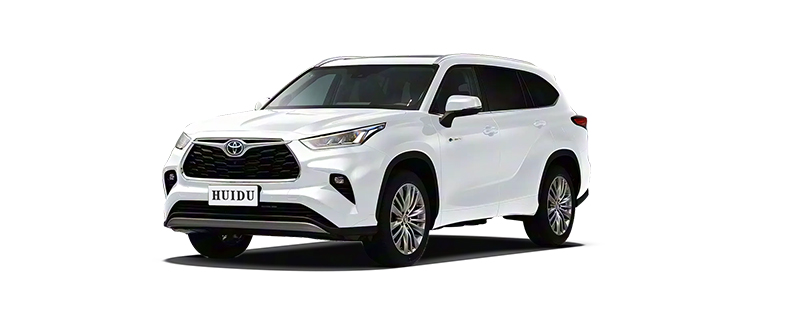
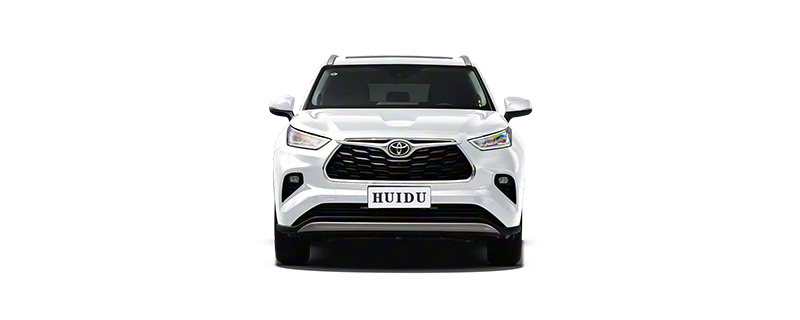
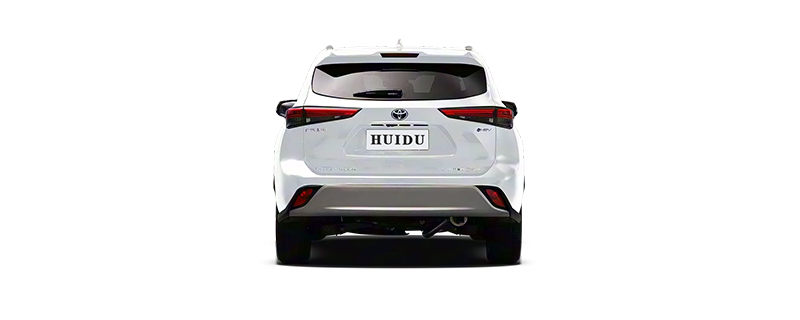
At a time when the 250,000 RMB (approx. 34,000 USD) family SUV segment is being aggressively contested by the Li Auto L6 – with its tech‑laden "fridge, TV, and sofa" appeal and extended‑range electric driving experience – the Toyota Highlander is fighting back as a defender of pragmatism. It seeks to reignite family buyers' interest in traditional joint‑venture SUVs through its long‑standing reputation for reliability, an exceptionally fuel‑efficient hybrid system, and a significantly reduced entry price. Behind the wheel, the 2026 Highlander's flagship 2.5L intelligent electric hybrid system demonstrates the deep tuning expertise of an established automaker. The engine delivers 139 kW (approximately 189 hp) and 236 N·m of peak torque; with the electric motor, total system output reaches 183 kW (approx. 245 hp). WLTC combined fuel consumption is as low as 5.8 L/100 km. Power delivery is so linear as to be almost uneventful – lacking the thrill of strong acceleration, yet offering a sense of predictability that inspires confidence. Whether creeping at low speeds or cruising on the highway, the E‑CVT delivers power with seamless smoothness, with barely perceptible transitions between electric and petrol operation.
By contrast, the Li Auto L6 is powered by a 1.5T four‑cylinder range extender (displacement 1,496 mL), with dual‑motor all‑wheel drive as standard across all variants. Combined system output is 300 kW (approx. 408 hp) and 529 N·m of torque. Its power philosophy is fundamentally different: the instant peak torque from pure electric drive at launch creates a strong sense of agility. A 0‑100 km/h time of 5.4 seconds allows this 2.3‑ton vehicle to decisively outperform the Highlander in stop‑light sprints. While the two models overlap significantly in energy type and market positioning, they belong to different eras: the Toyota Highlander is a "slow‑and‑steady, long‑lasting family steward," whereas the Li Auto L6 is a "tech‑equipped, responsive mobile sanctuary."
The Toyota Highlander's fifth‑generation THS hybrid technology runs on 92‑RON petrol. With a 65‑litre fuel tank, a full tank delivers a comprehensive range of approximately 1,200 km, effectively eliminating range anxiety. The Li Auto L6, with its extended‑range electric powertrain, achieves a CLTC combined range of 1,390 km, including about 212 km of pure electric range. Unlike the Highlander's traditional hybrid system, the Li Auto L6's range‑extender setup introduces no range anxiety when switching from electric to petrol mode, and the technology effectively addresses long‑distance concerns. Although the two vehicles take different paths in energy efficiency and convenience, they arrive at the same destination: drivers need not worry about range.
"The 2026 Toyota Highlander directly cuts its starting price to 219,800 RMB, while packing an 8155 chip and a large hybrid system. Facing intense competition from Chinese domestic players, can it still hold its benchmark position?" – Automotive Market Analyst
On low‑ to medium‑speed city commutes, the Toyota Highlander's "easy‑to‑drive" character is a stress‑free sense of composure. The steering is exceptionally light, while the chassis – underpinned by Toyota's TNGA architecture – feels substantial and taut, yet effectively isolates minor bumps. In stop‑and‑go traffic, the 2.5L hybrid system refines smoothness to the extreme: no lurch when releasing the brake, no jerk when pressing the accelerator – extremely easy to handle. By comparison, the Li Auto L6's instantaneous electric torque makes its initial throttle response overly sensitive, requiring more restraint in tight crawling conditions. The Highlander's 5.9‑metre turning radius also makes U‑turns and parking manoeuvres in narrow older urban districts easier than the L6.
In braking, the Toyota Highlander recorded a 100‑0 km/h stopping distance of approximately 38.1 metres. Light brake application feels linear, while heavy braking maintains a stable body posture, with electronic intervention so smooth that it rarely causes rear‑seat passengers any discomfort. The Li Auto L6 also performs admirably, with a 100‑0 km/h braking distance of only 37.65 metres. Brake force is evenly distributed, and even after ten consecutive full‑force stops, no significant fade is observed.
Long‑distance highway cruising has traditionally been a strength of Japanese petrol vehicles, and the Toyota Highlander remains relevant in this regard. The solid TNGA‑K platform keeps the vehicle rock‑steady at 120 km/h. The self‑adjusting suspension and wide, comfortable seats greatly reduce fatigue on long journeys. Thanks to the 2.5L hybrid system's efficiency, real‑world highway fuel consumption at full load is around 7.2 L/100 km. With 92‑RON petrol, a full tank easily covers a trip back to one's hometown. Although the Li Auto L6's dual motors provide stronger acceleration, fuel consumption rises noticeably when the battery is depleted, and it mandates 95‑RON petrol. Moreover, the Highlander's TSS 3.0 Pro driver‑assist system features smoother acceleration and deceleration algorithms during highway following, with excellent lane‑keeping ability on straight roads. It behaves like an experienced driver, causing no abrupt movements or discomfort even after prolonged use.
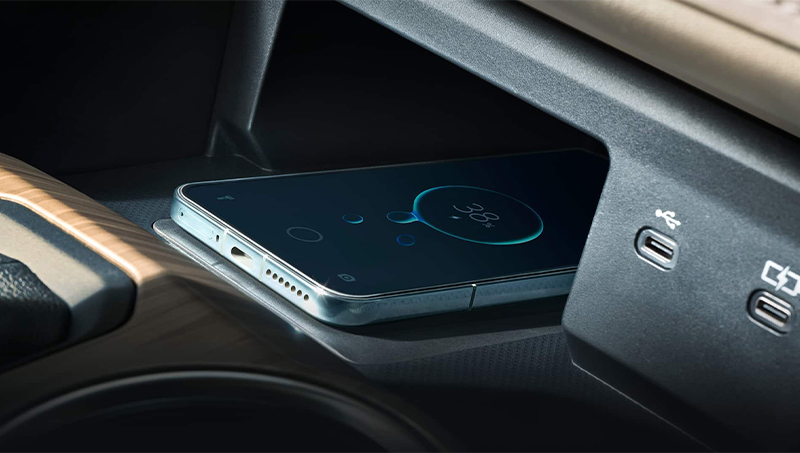
For a long time, the Toyota Highlander's interior was jokingly referred to as a "roughly finished house." However, with the 2026 model, Toyota has made substantial improvements. A 15.6‑inch floating display is standard across all variants, powered by an onboard Qualcomm Snapdragon 8155 chip, complemented by a 12.3‑inch full‑LCD instrument cluster. System responsiveness has been significantly enhanced, leaving behind the laggy "feature‑phone era." Wireless CarPlay, Huawei HiCar 5.0, and Baidu CarLife are supported, covering almost all major smartphone connectivity options. Voice control, online navigation, OTA updates, and other basic functions are also available.
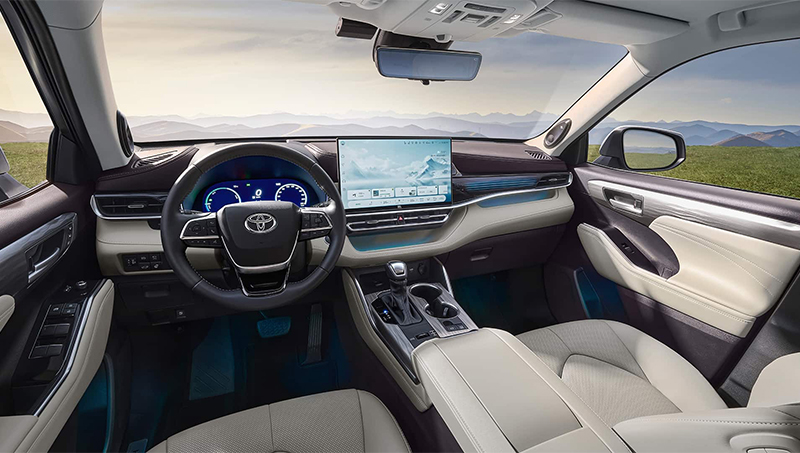
Nevertheless, when compared with the Li Auto L6, the gap remains evident. The Li Auto L6 not only features a 15.7‑inch dual screen plus HUD head‑up display, but also achieves lightning‑fast response thanks to the Qualcomm Snapdragon 8295P chip. Its voice assistant can handle six‑zone concurrent interaction. The rear‑seat refrigerator, TV, and massaging/heated seats take "family hedonism" to the extreme. If the Toyota Highlander's interior has crossed the threshold into "fine decoration," then the Li Auto L6's cabin is a "smart luxury home" pointing firmly toward the future.
The gap in driver‑assist technology is even more stark. The Highlander's standard TSS 3.0 Pro system provides L2‑level functions – accurate lane‑keeping on highways, speed reduction based on curve radius – that suffice for daily assistance. However, it lacks advanced features such as NOA (Navigate on Autopilot), LiDAR redundancy, and automatic lane changing. The Li Auto L6's standard AD Max system includes LiDAR on all variants, supporting full‑scenario intelligent driving including urban NOA and autonomous lane‑changing on highways. The Toyota Highlander's conservatism in this area makes it seem outmatched.
"Step into the Toyota Highlander's cabin, and you feel the reassurance of practical family motoring and the solid craftsmanship of an established manufacturer. Step into the Li Auto L6, and you experience the cutting‑edge intelligence and light‑luxury charm of a tech‑oriented family vehicle." – Editor‑in‑Chief of Driving Control
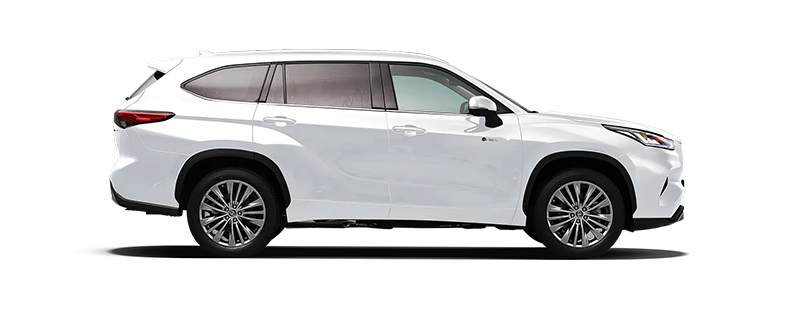
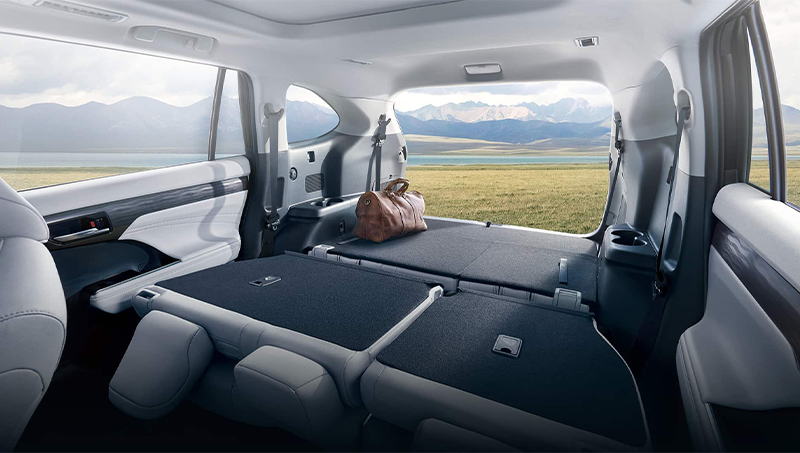
Space is the ultimate litmus test distinguishing these two vehicles. The Toyota Highlander's nearly 5‑metre length and 2,850 mm wheelbase make it a dominant player in the traditional mid‑size SUV segment. Its 2+3+2 seven‑seat layout directly addresses the essential needs of families with two or more children. Even though the third row is best suited for short trips with small children, it means that the family can assign seats without worrying about leaving grandparents or other members behind. With 520 litres of standard cargo space, the Toyota Highlander can still accommodate three suitcases when fully occupied. When the second‑ and third‑row seats are folded flat, the cargo length exceeds two metres – enough to load a mid‑size motorcycle. The Highlander suits the typical "Chinese family" that has two children and wants to take both sets of parents on a road trip.
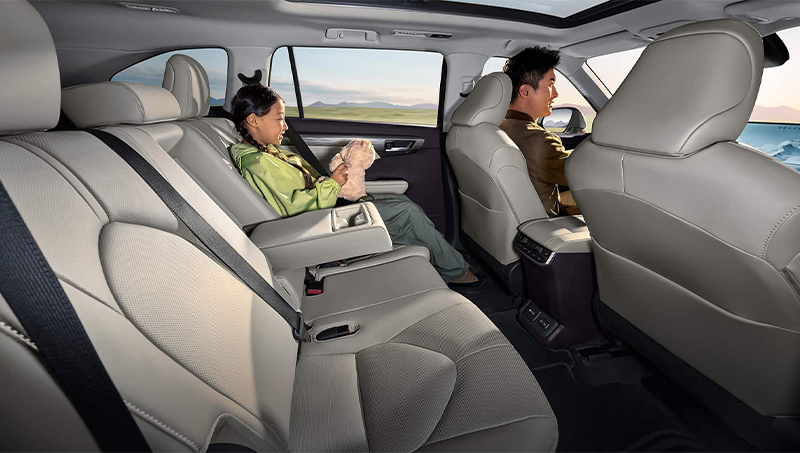
The Li Auto L6, on the other hand, is an exceptional "large five‑seat" SUV. Its 2,920 mm wheelbase is entirely dedicated to the rear seats: second‑row legroom exceeds 1.1 metres, and when the seats are folded flat, it transforms into a "mobile bed room." The first‑class seat comfort is far superior to the Toyota Highlander's second row. However, for journeys with more than five occupants, the L6's five‑seat body simply cannot meet the demand.
Toyota's core strengths are its brand halo of reliability, extremely low failure rates, and impressive resale value. The Toyota Highlander's long‑established "unbreakable" reputation and the fact that it loses only a few thousand dollars after three years of ownership are assets that newer players like Li Auto cannot build quickly. In the used‑car market, Toyota's badge remains its most formidable value barrier.
"The Li Auto L6 starts at 249,800 RMB. With its extended‑range powertrain, fridge, TV, and sofa, intelligent driving assistance, and five‑screen interaction, this specification sheet represents a crushing blow when placed next to the Toyota Highlander." – Ai Loves Cars
1. What is the 2026 Toyota Highlander?
The 2026 Toyota Highlander is a mid‑size SUV built by GAC Toyota on the TNGA‑K platform. It is defined in today's market by its essential seven‑seat configuration and high resale value. Centred on Toyota's fifth‑generation THS hybrid's low fuel consumption, class‑leading space, and joint‑venture quality control, it targets budget‑conscious families with multiple children in the 200,000–280,000 RMB price range.
2. What are the Toyota Highlander's core competitive advantages?
Its core competitiveness lies in the combination of joint‑venture brand reputation, exceptional smoothness, and seven‑seat practicality:
Toyota's legendary reliability and approximately 70% three‑year resale value.
Ultra‑low fuel consumption of 5.8 L/100 km, maximising economy with 92‑RON petrol.
Genuine seven‑seat layout, meeting the essential needs of families with two or more children.
The addition of the 8155 chip significantly narrows the previous gap in smart features.
A starting price of 219,800 RMB – a compelling value proposition among today's joint‑venture SUVs.
3. What are the main differences between the Toyota Highlander and Li Auto L6? How to choose?
Powertrain & Range: Toyota Highlander – fifth‑gen THS hybrid, fuel‑efficient and smooth, 1,200 km combined range. Li Auto L6 – extended‑range dual‑motor, 0‑100 km/h in 5.4 seconds, 212 km pure electric range.
Chassis & Handling: Toyota Highlander – comfort‑oriented, smooth ride, ideal for family cruising. Li Auto L6 – sportier feel, CDC variable damping, better lateral support.
Smart Cockpit: Toyota Highlander – 8155 chip + 15.6‑inch screen, adequate and responsive. Li Auto L6 – Snapdragon 8295P + dual 15.7‑inch screens + fridge/TV/sofa, immersive and next‑level smart experience.
ADAS: Toyota Highlander – TSS 3.0 L2 system, covers highway cruising. Li Auto L6 – standard LiDAR with AD Max, supports urban NOA and full‑scenario intelligent driving.
Seating & Space: Toyota Highlander – true seven‑seat layout, third row for occasional use, accommodates up to seven. Li Auto L6 – extreme large five‑seat layout, luxurious space but limited to five occupants.
Price Range: Toyota Highlander – lower entry price (219,800 vs. 249,800 RMB), strong value proposition. Li Auto L6 – entry model already top‑spec, maximum luxury and tech appeal.
Recommendation:
Choose the Toyota Highlander if you prioritise proven reliability, fuel economy, strong resale value, have a genuine need to carry up to seven people, and do not demand advanced autonomous driving features.
Choose the Li Auto L6 if you enjoy cutting‑edge smart features, crave the instant torque of electric drive, typically travel with five or fewer people, and are willing to pay a premium for a tech‑forward, luxurious feel.
User Comments
86: I want to buy the high‑spec five‑seat version without the panoramic sunroof.
Xue: This car looks great and suits family use.
Advanced Search
Recommended Models
Geely-Galaxy-Geely Galaxy M7
Updated: May,28,2026

Mazda-Mazda EZ-60
Updated: Mar,02,2026

GAC Trumpchi-Trumpchi ES9
Updated: Feb,26,2026
Related News
A pioneering creation in the new energ...
Nov,05,2025
Geely Galaxy M9: Reshaping the Large S...
Nov,06,2025
All trims of the Tang L DM are equippe...
Nov,05,2025
What are your thoughts on this car?
* Required Fields