

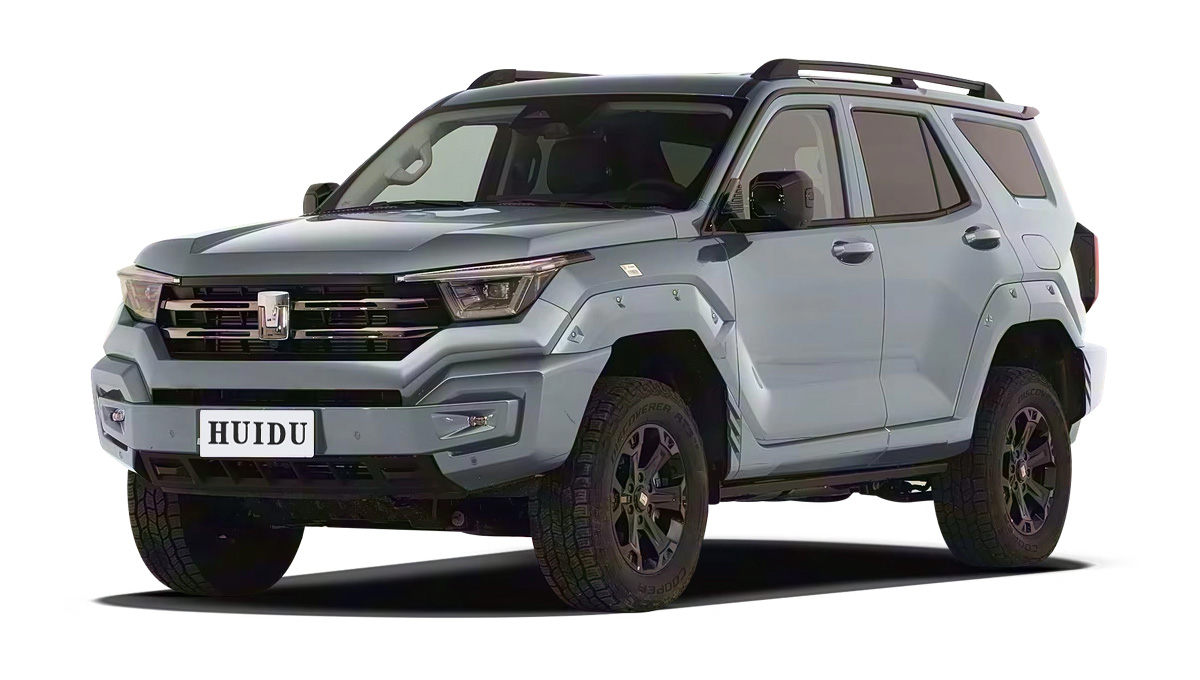
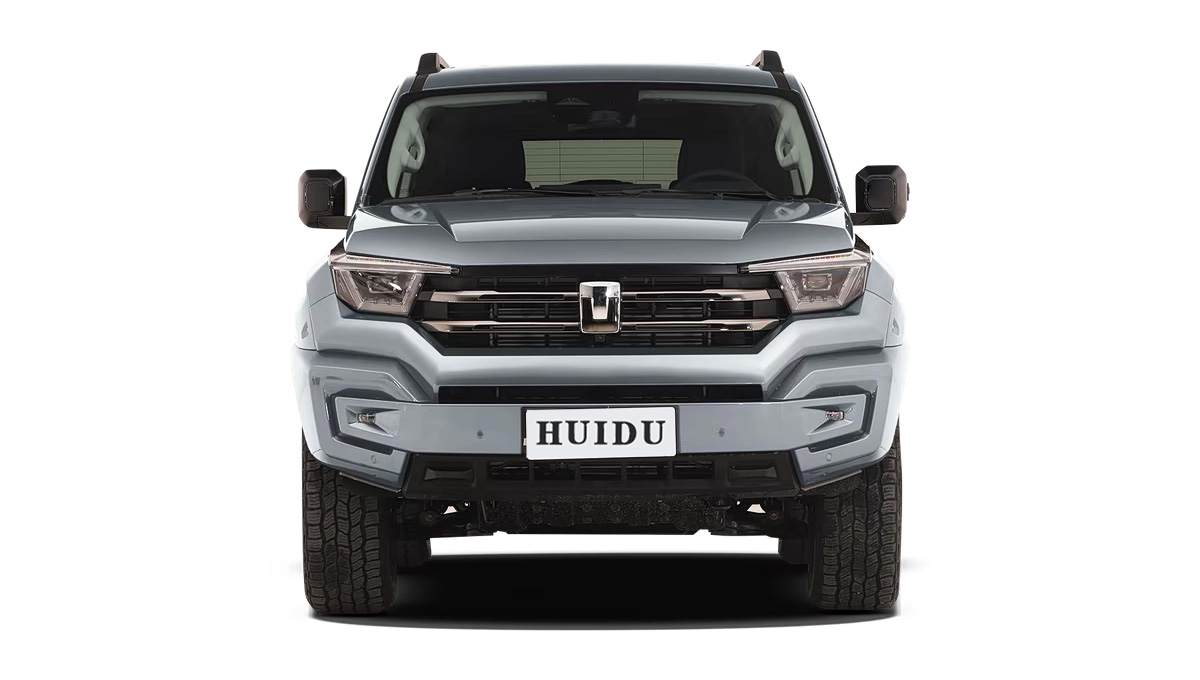
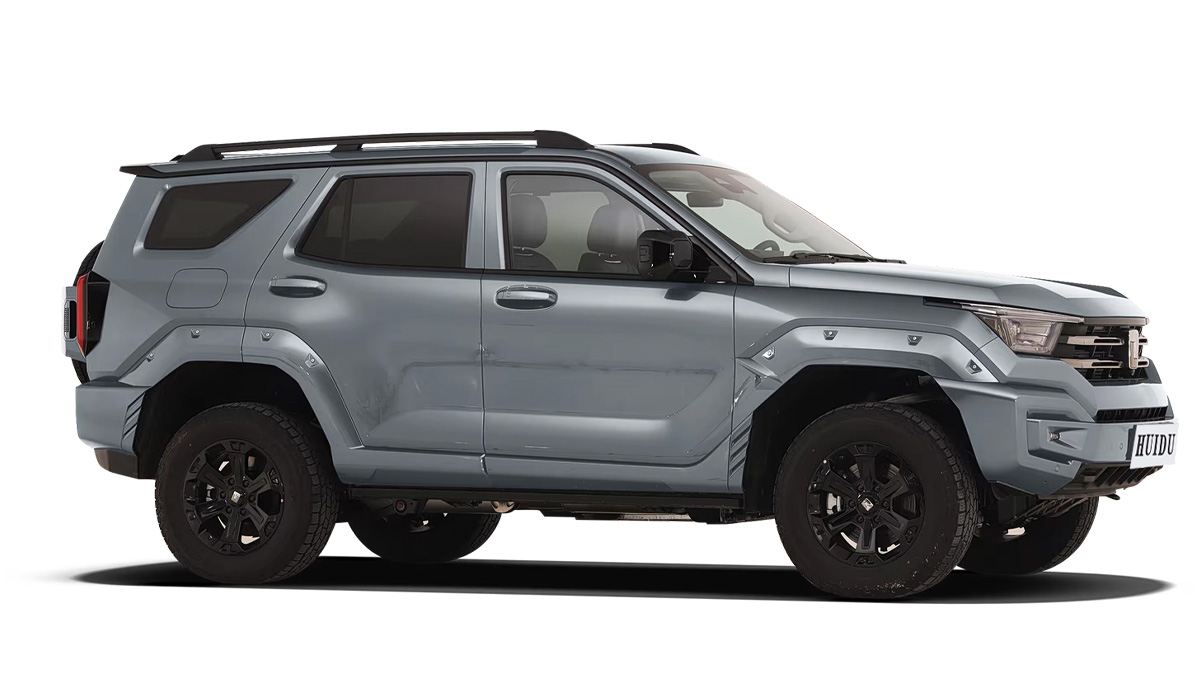
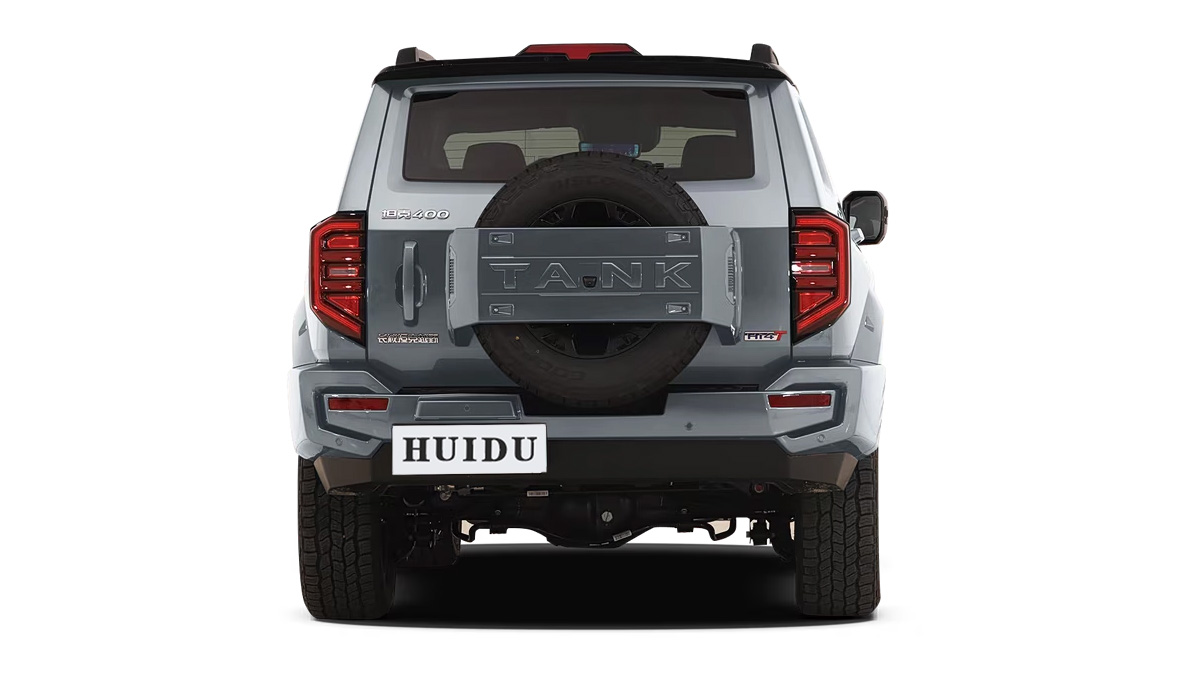
Amid the electrification wave sweeping through the hardcore off-road segment, the Tank 400 Hi4-T stands out as a compelling fusion of traditional ruggedness and electric intelligence. Powered by a plug-in hybrid system combining a 2.0-liter turbocharged engine with an electric motor, it delivers a combined output of 300 kW and an impressive 750 N·m of torque—ensuring ample power reserves for both low-speed rock crawling and high-speed overtaking. Unlike pure electric off-roaders that prioritize instantaneous electric response, the Tank 400 Hi4-T architecture emphasizes “synergistic oil-electric cooperation.” The engine and motor outputs are meticulously calibrated to deliver linear, controllable power—particularly advantageous on unpaved terrain, where steady and sustained torque delivery enhances composure and control.
By contrast, the Fangchengbao Bao 5 also adopts a plug-in hybrid layout but leans heavily into electric dominance via its Dual Mode Off-road (DMO) platform. Its dual-motor setup (front and rear) offers sharper torque response and a more immediate throttle feel on paved roads, embodying a nimble, “electric-first” off-road character. Both vehicles target the hardcore SUV niche, yet their powertrain philosophies diverge sharply: the Tank 400 Hi4-T behaves like a “fuel-powered beast electrified,” while the Bao 5 positions itself as an “off-road-capable EV enthusiast.”
In terms of efficiency and range, the Tank 400 Hi4-T is equipped with a 37.1 kWh battery pack, offering 105 km of WLTC-rated all-electric range and over 800 km of total driving range—sufficient for both daily commuting and extended overland expeditions. The Bao 5, meanwhile, offers two battery options (31.8 kWh and 49.5 kWh), delivering CLTC-rated electric ranges of 125 km and 180 km respectively, similarly aiming for full-scenario versatility. Both models tackle range anxiety through their “gasoline-plus-electric” flexibility—but via distinct technical pathways.
“The Tank 400 Hi4-T isn’t engineered to be the fastest off-roader—it’s built to be the most reliable and composed. Its hybrid system doesn’t seek to redefine off-roading; rather, it aims to make off-roading more sustainable and intelligent.” — Chen Yan, Editor-in-Chief,Wilderness Log, an off-road lifestyle publication
On paved roads, the Tank 400 Hi4-T exhibits a level of refinement rarely seen in traditional body-on-frame SUVs. Its front double-wishbone and rear solid-axle suspension—tuned with adaptive electromagnetic dampers—effectively absorbs minor road imperfections while maintaining well-controlled body motions. Steering feel is weighty with moderate play, consistent with its off-road orientation, yet offers noticeably improved precision compared to conventional rugged SUVs. The braking system features dual-piston front and single-piston rear calipers paired with large ventilated discs, achieving a tested 100–0 km/h stopping distance of approximately 38.5 meters (with 265/65 R18 all-terrain tires)—a respectable figure for a near-2,800 kg “boxy” SUV.
The Bao 5, by comparison, employs a fully independent double-wishbone setup at both axles and, in higher trims, integrates BYD’s Yunyang-P intelligent hydraulic body control system. This grants it a theoretical edge in ride comfort, cornering support, and vibration damping sophistication. Yet the core distinction on-road remains one of powertrain character: the Tank 400 Hi4-T mimics the relentless thrust of a large-displacement gasoline engine, whereas the Bao 5 delivers the brisk, responsive feel typical of electric-dominant systems.
This is where the Tank 400 Hi4-Ttruly shines. It comes fully equipped with a body-on-frame chassis, electronically controlled mechanical differential locks, Tank Turn (a tight-radius turning function), and Crawl Control. With an approach angle of 33°, departure angle of 30°, 224 mm of ground clearance, and a maximum wading depth of 800 mm, its specifications firmly place it in the hardcore category. In real-world off-road conditions, the Tank 400 Hi4-T system demonstrates clear advantages: the electric motor provides precise low-speed torque modulation, while the engine seamlessly engages when sustained high-power output is required—resulting in nearly uninterrupted propulsion during steep ascents or recovery scenarios.
The Bao 5 matches this capability with front/rear e-lockers, an electronic center differential lock, and its proprietary “Leopard Turn” maneuverability feature. Thanks to its in-wheel motor placement, it achieves faster wheel-end torque response. However, under prolonged, high-load off-road conditions, the Tank 400 Hi4-T’s ability to directly drive via its internal combustion engine may offer superior durability. Both vehicles represent the pinnacle of Chinese engineering in hardcore SUVs—just through different execution strategies: the Tank 400 Hi4-T favors “engine-primary, electric-assist,” while the Bao 5 embraces “electric-primary, engine-assist.”
Tire-wise, the test vehicle came shod with 265/65 R18 Cooper Discoverer AT3 all-terrain tires, balancing on-road quietness with off-road grip. Buyers can opt for 265/60 R18 highway-terrain (HT) variants or even aggressive mud-terrain (MT) tires. The Bao 5 typically uses either 265/65 R18 or 275/55 R20 tires, reflecting a more all-around orientation.
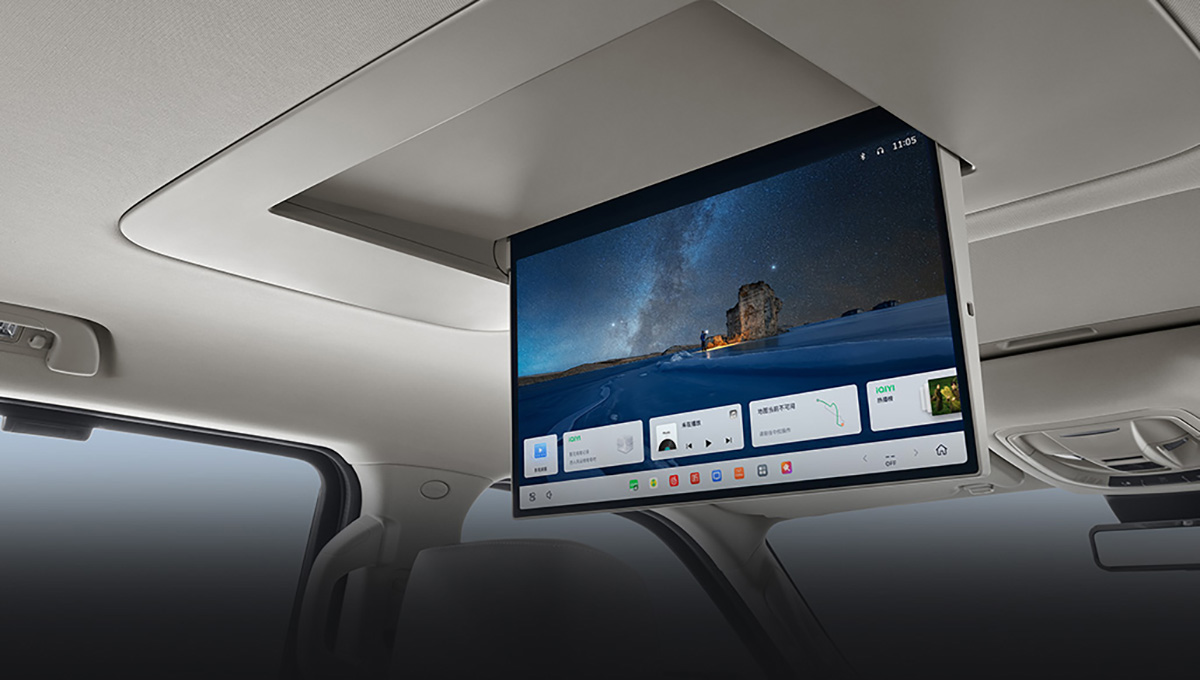
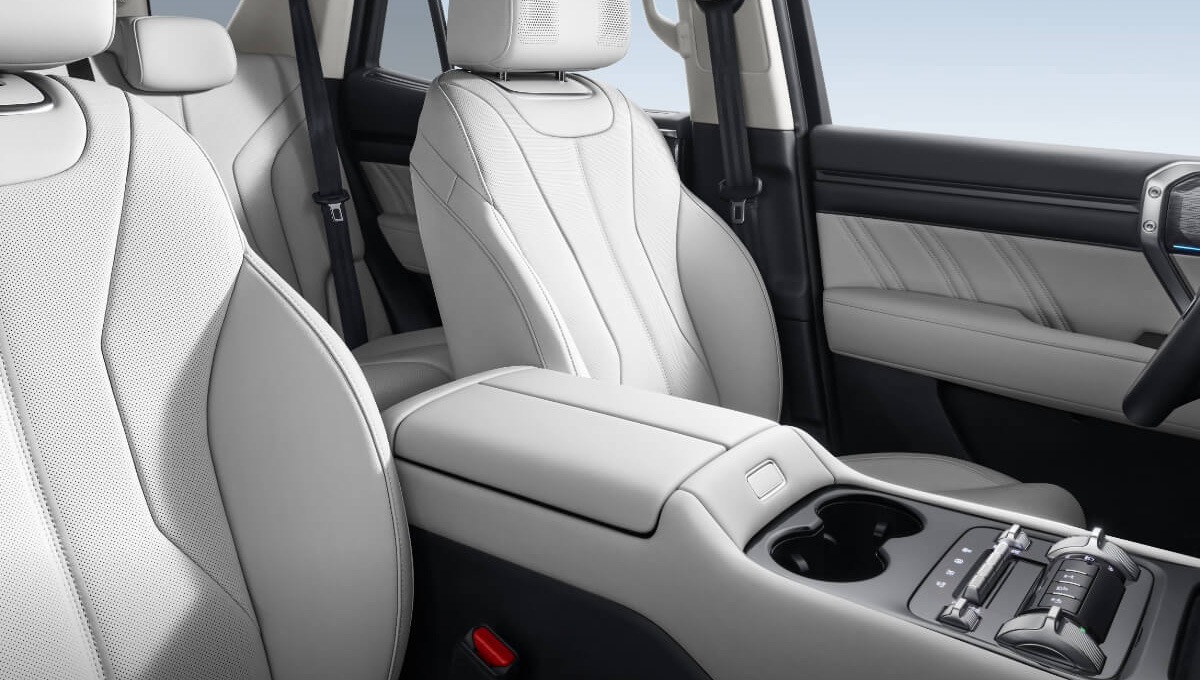
Inside the Tank 400 Hi4-T, bold lines and robust materials create an unmistakably utilitarian ambiance. The symmetrical dashboard is generously wrapped in soft-touch surfaces, and a substantial grab handle is mounted ahead of the front passenger—a nod to serious off-road use. The digital cockpit centers around a 12.3-inch fully digital instrument cluster and a 16.2-inch infotainment touchscreen, supporting 540-degree surround-view monitoring (including transparent underbody imaging) and real-time off-road telemetry. Seats are broad and well-cushioned, with front-row occupants enjoying heating, ventilation, and massage functions.
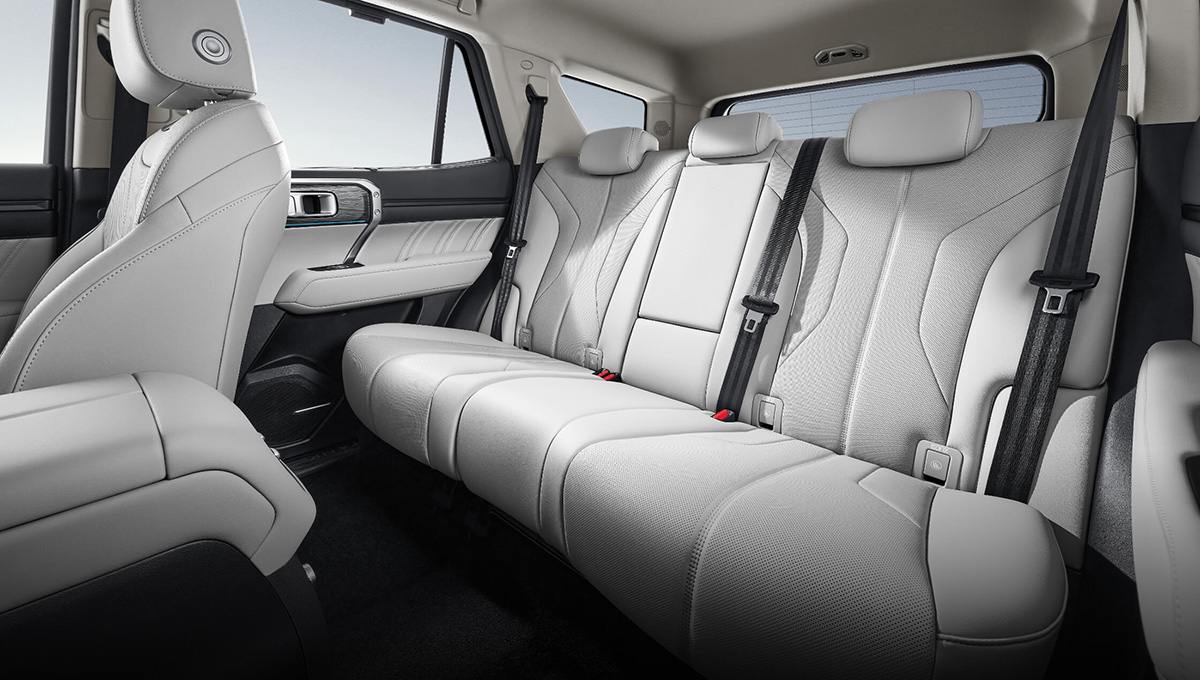
Compared to the Bao 5, the Tank 400 prioritizes a “tactical utility” aesthetic, retaining numerous physical buttons for ease of use—even with gloves on. The Bao 5, conversely, leans into a tech-forward, lifestyle-oriented cabin with a rotating central display, seamless digital interfaces, and warmer, more residential-grade materials. The contrast is stark: the Tank 400 Hi4-T feels like a mobile “field command post,” while the Bao 5 resembles an “intelligent adventure pod.”
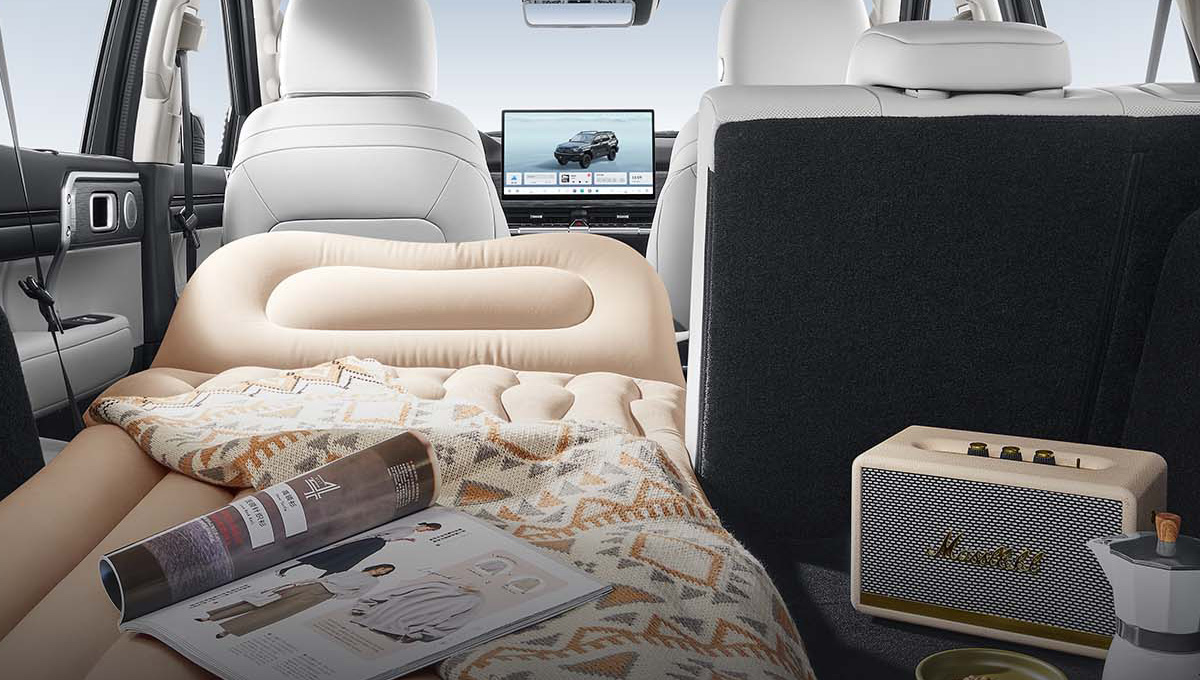
As a midsize SUV, the Tank 400 Hi4-Tmeasures 4,985 mm long, 1,960 mm wide, and 1,900 mm tall, with a 2,850 mm wheelbase. Its five-seat configuration offers generous headroom and legroom, while the cargo area provides 566 liters of space—expandable to 1,803 liters with the rear seats folded flat, featuring a level load floor ideal for bulky gear.
The slightly more compact Bao 5 (4,890 × 1,940 × 1,920 mm, 2,800 mm wheelbase) still delivers ample interior space and thoughtful cargo solutions. Storage philosophies differ: the Tank 400 favors rugged, accessible bins in doors and the center console, while the Bao 5 excels in clever, concealed storage innovations.
Standard equipment on the Tank 400 Hi4-T includes full-time four-wheel drive, three locking differentials, Crawl Control, Tank Turn, a panoramic sunroof, and heated/ventilated front seats. Higher trims add rear seat heating, a heated steering wheel, and adaptive electromagnetic suspension. Priced under RMB 300,000, it delivers a complete hardcore hybrid off-road experience at a compelling value. Meanwhile, top-tier Bao 5 models boast premium features like the Yunyang-P system, HUD, and Devialet premium audio—highlighting a strategic divergence: raw off-road value versus tech-luxury refinement.
1. What is the engine displacement of the Tank 400 Hi4-T?
It features a 2.0-liter turbocharged gasoline engine (1,998 cc) paired with an electric motor in a plug-in hybrid configuration.
2. How does its braking performance compare?
With all-terrain tires fitted, it achieves a 100–0 km/h stopping distance of approximately 38.5 meters—solid for its class and weight.
3. What tire options are available?
Standard fitment is 265/65 R18 all-terrain tires; buyers may opt for 265/60 R18 highway-terrain or more aggressive mud-terrain variants.
4. Tank 400 Hi4-T vs. Fangchengbao Bao 5: which to choose?
Choose the Tank 400 Hi4-T if you prioritize proven body-on-frame reliability, durable oil-electric synergy, and a functional, no-nonsense interior. Opt for the Bao 5 if you favor cutting-edge electric off-road dynamics, advanced cabin tech, and are willing to pay a premium for innovations like Yunyang-P. Both are outstanding representatives of China’s new-generation hardcore SUVs—distinguished not by capability, but by character and engineering philosophy.
User Comments
***E:“Its luxury-inspired exterior design, combined with the Tank 400 Hi4-T powertrain, makes its launch event a must-see.”
*****4u4:“The undisputed king of hardcore off-roaders!”
Advanced Search
Recommended Models
Geely-Galaxy-Geely Galaxy M7
Updated: May,28,2026

Mazda-Mazda EZ-60
Updated: Mar,02,2026

GAC Trumpchi-Trumpchi ES9
Updated: Feb,26,2026
Related News
A pioneering creation in the new energ...
Nov,05,2025
Geely Galaxy M9: Reshaping the Large S...
Nov,06,2025
All trims of the Tang L DM are equippe...
Nov,05,2025
What are your thoughts on this car?
* Required Fields