

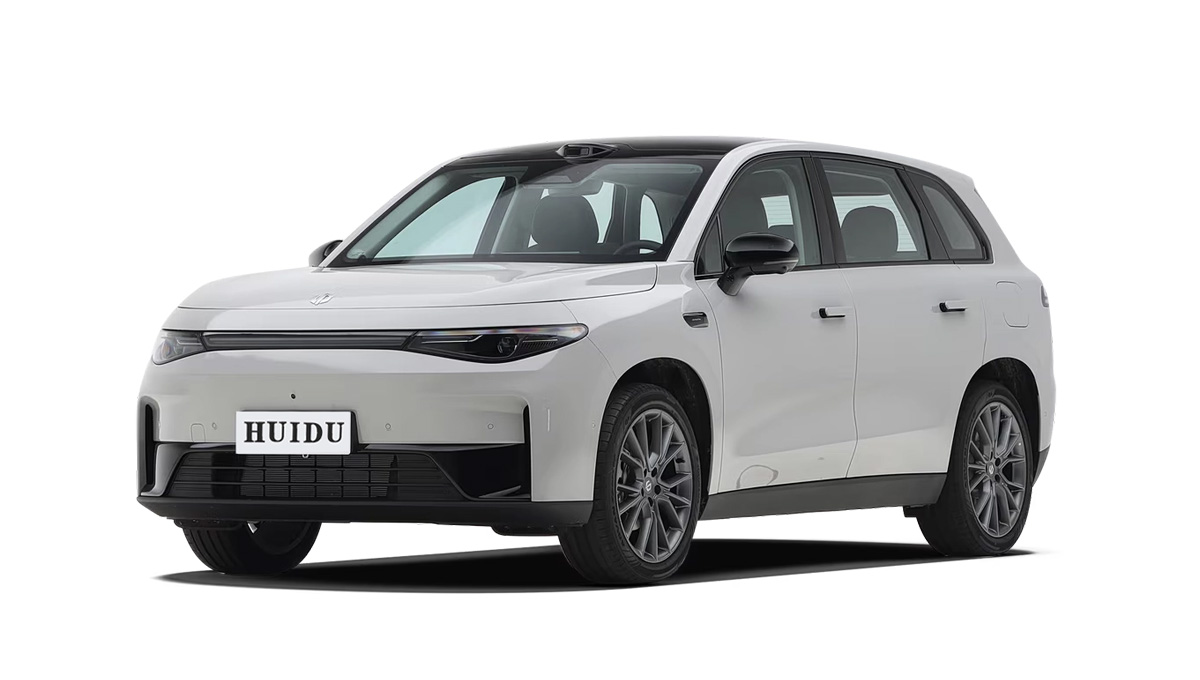
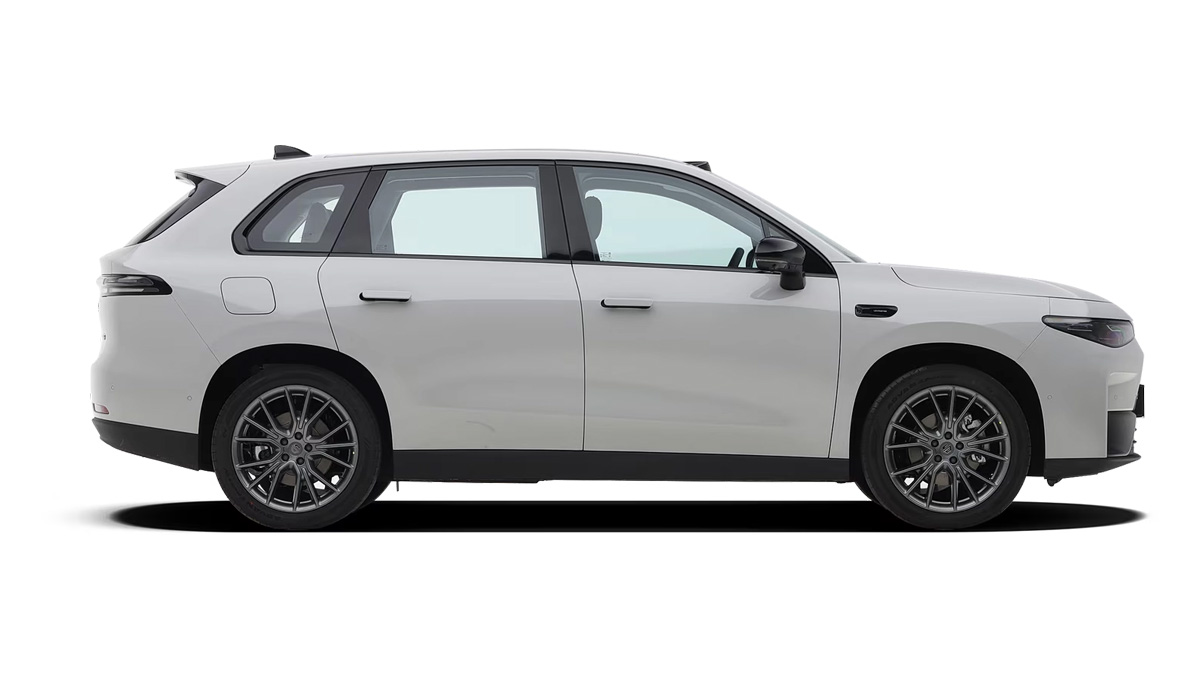


At a time when SUVs have become the family vehicle of choice and the market is a highly competitive 'red ocean', Leapmotor's decision to launch its electric SUV – Leapmotor C10 – in the UK is undoubtedly a bold move. To wrest customers from models like the Škoda Elroq and Renault Scenic, Leapmotor C10's confidence stems from its exceptional value proposition centered on its 'class-above' dimensions: it measures 4.7 meters in length, matching the BMW iX3, while being priced against mainstream rivals.
Alongside the pure electric version, Leapmotor C10 line-up also includes a PHEV variant employing range-extender electric technology to alleviate range anxiety, positioning it against the Kia Sportage and MG HS PHEVs.
The true game-changer, however, lies in Leapmotor C10's ambition to redefine the value standard in this class. While its price is significantly lower than similarly-sized competitors like the Kia EV6 and Škoda Enyaq, Leapmotor's commitment to a 'high-value' philosophy ensures its build quality and refinement are no less impressive. Coupled with high-standard features across the range, this makes it a formidable contender.
But does value-for-money equate to mediocrity? Can it truly challenge the best electric SUVs? Our in-depth comparison review will reveal the answer.
The pure electric Leapmotor C10 is equipped with a 69.9kWh battery and a 215hp electric motor to propel its nearly two-tonne weight. While its acceleration isn't as fierce as a Tesla Model Y's, its official 0-100 km/h time of 7.5 seconds is quicker than the base versions of the Renault Scenic and Škoda Elroq, though it's slightly slower than those models' more powerful variants.
The pure-electric C10, with its 69.9kWh battery, boasts an official range of 263 miles (approximately 420 km). This figure surpasses the 59kWh Škoda Elroq 60 and is on par with the 60kWh Renault Scenic Comfort. However, the Škoda Elroq 85, equipped with a larger 77kWh battery, offers up to 360 miles (approx. 580 km) of range at a price point close to the C10. As for similarly-sized models with even longer ranges, like the Kia EV6 and the 77kWh Škoda Enyaq, their prices are substantially higher than the C10's.
The Leapmotor C10's ride quality is a tale of two sides: it deals with minor bumps competently but can feel abrupt and jiggly over larger impacts, accompanied by a slight wobble. In terms of comfort, it falls short of the Škoda Elroq (especially with its optional adaptive suspension) and the Renault Scenic.
Its handling is similarly middle-of-the-road. The stiff chassis keeps the body well-controlled, but the front wheels run out of grip quickly in corners. The steering is light and vague, which aids urban maneuverability but sacrifices driver connection and feedback.
The car's strengths lie in its excellent cabin quietness and a powerful, if somewhat abrupt, brake pedal. However, its safety system calibration leaves room for improvement; overly sensitive and frequent interventions mean they can sometimes feel more like a nuisance than an aid. The lane-keeping assist system (including emergency lane-keeping) can only be deactivated via the touchscreen menu, unlike the dedicated physical button found in the Scenic. Leapmotor has stated it plans to improve these systems via future OTA updates.
"Around town, switching to Eco mode from Sport or Comfort makes the C10's steering incredibly light. It reminds me of the old City mode Fiats used to offer, and it's perfect for shuffling around tight car parks." – Dan Jones, Senior Reviewer
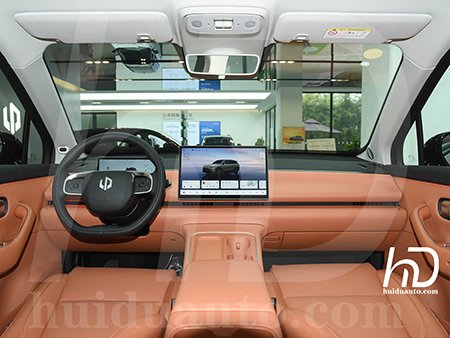
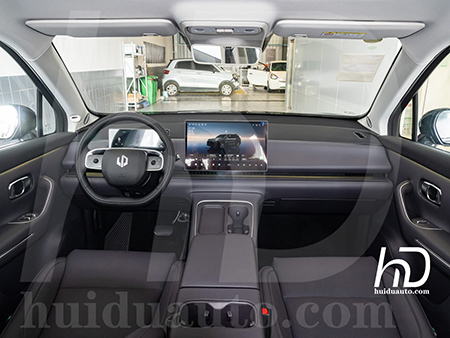
Inside, the Leapmotor C10 follows a clear benchmarking strategy. Material choices have a similar tactile feel to those in a Tesla, right down to the rubberised material on the top of the door cards. This inspiration pays practical dividends; the cabin avoids cheap-looking plastics, with any harder, untextured surfaces cleverly hidden away from immediate view. Combined with seemingly solid build quality, it creates a sense of sophistication that belies the car's price. A standard 10.3-inch digital instrument cluster is a significant advantage, allowing the driver to keep their eyes on the road ahead. A notable omission, however, is the current lack of support for Android Auto and Apple CarPlay.

Despite the C10's 14.6-inch infotainment touchscreen being impressive on a hardware level – sharp and responsive – its 'all-touch' philosophy presents a human-machine interface challenge. Adjusting basic functions like the climate control requires using the screen while driving, a design less intuitive and potentially more distracting than the dedicated control panel in the Kia EV6 or the physical buttons in the Renault Scenic.
The C10's cabin embraces a minimalist ethos, with almost no physical buttons save for the four buttons and two scroll wheels on the steering wheel, which are identical to those in the new Tesla Model 3. It's an ideal choice for drivers who prefer a commanding, high SUV seating position. The standard electrically adjustable front seats offer a wide range of travel, making it easy to find a comfortable driving position.
Visibility is another strong suit for the C10. Slim window pillars and a large front screen provide an excellent view of the road ahead at junctions. The view out the back is also very good, aided by a large rear window and sizeable openings in the rear pillars. To aid parking, rear parking sensors and a 360-degree camera system are standard across the range, as are automatic LED headlights.
The Leapmotor C10 markets its 'spacious and comfortable cabin' as a core selling point, and it delivers an experience that exceeds expectations for all occupants. Both front and rear passengers, even those over 183cm tall, will find head and legroom comparable to the Kia EV6. The completely flat rear floor ensures ample comfort for the middle-seat passenger on journeys.
Storage up front is practical and generous, encompassing a large centre console bin, under-armrest space, cup holders, and a wireless charging pad. Slightly disappointing is the 435-litre boot capacity; while sufficient for a family's weekend trip, it is smaller than almost all key rivals like the Škoda Elroq (470L) and Kia EV6 (490L). Furthermore, the rear seats offer only a basic 60/40 split-folding function.
"It's a shame the boot isn't bigger, given the C10's length. That said, it does have a frunk which is useful for storing charging cables to free up boot space." – Dan Jones, Senior Reviewer
On a cash purchase basis, the Leapmotor C10 positions itself adeptly in a market gap. Its pricing undercuts main rivals like the Kia EV6, Renault Scenic, and Škoda Enyaq, sitting just above the entry-level Škoda Elroq. For company car users, this lower list price translates directly into reduced Benefit-in-Kind (BIK) tax contributions.
The equipment level can be described as 'high-spec from entry-level', comprehensively covering comfort and convenience features. However, potential buyers should note its 83kW charging ceiling is a significant weakness; a 30-80% charge takes 30 minutes, a pace that has been far surpassed by competitors.
The Leapmotor C10 achieved a full five-star rating in the rigorous Euro NCAP safety tests. Standard safety are comprehensive, including Automatic Emergency Braking (AEB), Lane Centering Control, Lane Departure Warning, Blind Spot Detection, Rear Cross-Traffic Alert and Braking, and Driver Drowsiness Monitoring. In real-world use, however, we found some of these systems to be overly sensitive in their alerts and interventions, a calibration approach that is not without its controversy.
1.What brand does the Leapmotor C10 belong to?
The Leapmotor C10 is a model produced by Leapmotor, a Chinese new energy vehicle (NEV) manufacturer.
2.What type of vehicle is the Leapmotor C10?
The C10 is a mid-size SUV. Depending on its powertrain configuration, it is available in two variants: a mid-size battery electric vehicle (BEV) and a mid-size extended-range electric vehicle (EREV).
3.Which company holds a controlling stake in Leapmotor?
Leapmotor’s primary strategic shareholder and global partner is Stellantis N.V., the multinational automotive group that owns brands such as Peugeot, Citroën, Jeep, and Maserati. Stellantis has acquired approximately 21% of Leapmotor’s shares and, together with the Chinese automaker, established a joint venture named Leapmotor International, aimed at accelerating global expansion.
4.What vehicle does “LP” refer to?
As of currently available information, Leapmotor does not have any known production model designated or abbreviated as “LP.” In the automotive industry, the prefix “LP” is historically associated with Lamborghini models (e.g., Aventador LP 700-4), which is unrelated to Leapmotor.
For copyright-related inquiries, please contact us.Partial content is sourced from What Car?.
Advanced Search
Recommended Models
Geely-Galaxy-Geely Galaxy M7
Updated: May,28,2026

Mazda-Mazda EZ-60
Updated: Mar,02,2026

GAC Trumpchi-Trumpchi ES9
Updated: Feb,26,2026
Related News

A pioneering creation in the new energ...
Nov,05,2025

Geely Galaxy M9: Reshaping the Large S...
Nov,06,2025
All trims of the Tang L DM are equippe...
Nov,05,2025
What are your thoughts on this car?
* Required Fields