

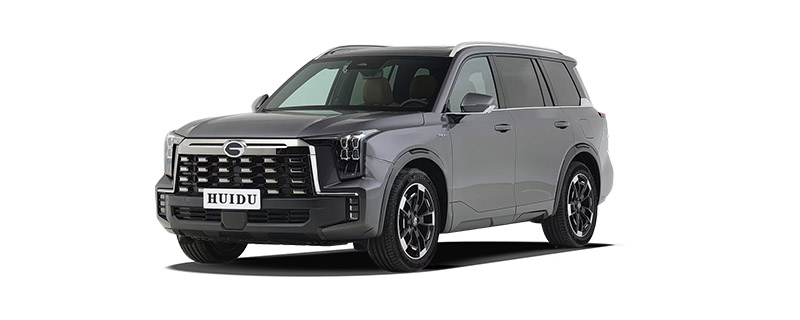
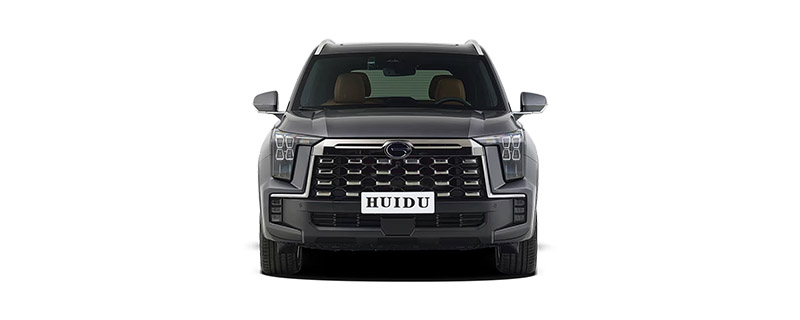
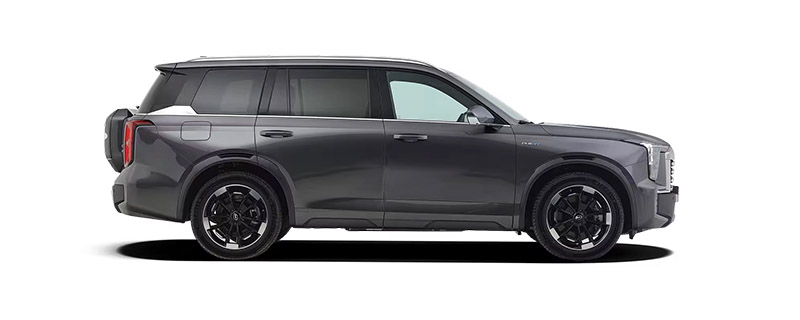
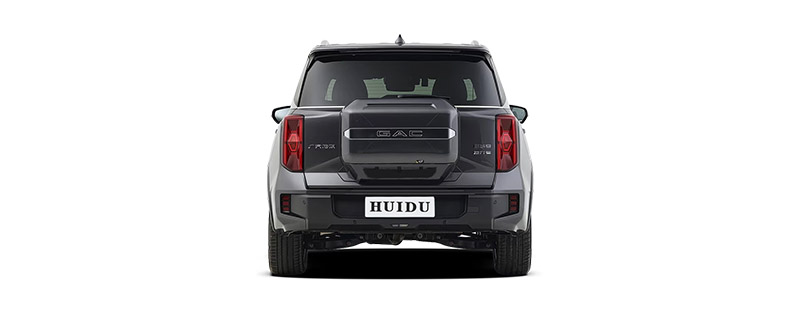
At a time when the mid-to-large new energy SUV market remains largely defined by the Li Auto L8’s tech-forward cabin and family-oriented ecosystem, the GAC Trumpchi ES9 arrives as a rugged heavyweight. Leveraging a traditional OEM’s robust mechanical foundation, a mature 2.0T plug-in hybrid system, and an aggressive price point, the GAC Trumpchi ES9 aims to reset the value benchmark for 7-seat plug-in hybrid SUVs in the 230,000–270,000 RMB bracket. Behind the wheel, the GAC Trumpchi ES9’s dedicated 2.0T GAC Magnificent Hybrid engine demonstrates the depth of engineering from a legacy powertrain specialist. Mated to a 2-speed DHT transmission and a front electric motor producing 134 kW and 300 N·m of peak torque, the system delivers a combined 274 kW (approx. 373 hp) and 630 N·m of torque – figures that comfortably surpass many mainstream competitors.
By comparison, the Li Auto L8 uses a 1.5T four-cylinder range extender paired with dual electric motors, generating 330 kW (449 hp) and 620 N·m, with a 0-100 km/h time of 5.3 seconds. While the two models overlap heavily in energy strategy and target audience, their underlying powertrain philosophies diverge sharply. The GAC Trumpchi ES9 delivers a classic mechanical experience driven by direct engine engagement – especially during highway cruising – creating a bulwark of efficiency and long-term durability. The Li Auto L8, in contrast, prioritizes comfort and electric-motor-driven cruising, representing the new-EV cruiser archetype; its intelligent ecosystem and EV-like noise-and-vibration-free refinement form a moat that traditional hardware struggles to match.
The GAC Trumpchi ES9 is equipped with a 25.57 kWh battery pack, offering a CLTC pure electric range of 143 km and a combined range of 1,215 km. The Li Auto L8 offers either a 42.8 kWh or 52.3 kWh ternary lithium battery, with a maximum CLTC electric range of 280 km and a combined range of 1,415 km.
“The GAC Trumpchi ES9’s pricing strategy is exceptionally smart. Leveraging the scale and cost control of a traditional automaker, GAC offers a 5-meter-long, 6/7-seat, 2.0T plug-in hybrid at the 230,000 RMB level. For the first time, family buyers see a large 7-seat plug-in hybrid as genuinely attainable.” — Chen Yuan, SUV Market Analyst
The GAC Trumpchi ES9’s handling carries the unmistakable feel of a traditional major automaker. The steering is solid – light at low speeds and reassuringly weighted at highway speeds. An ultra-tight turning radius of 5.85 meters makes this 5.1-meter-long mid-to-large SUV remarkably agile in urban U-turns. The chassis employs a front MacPherson, rear multi-link independent suspension, tuned toward a comfort-biased, planted demeanor. Its filtering of road-surface irregularities is competent by old-school engineering standards, and body motion over speed bumps is well controlled. However, under low-battery conditions, the noise intrusion from the 2.0T engine’s direct drive and transmission engagement is noticeably higher than the consistently serene electric-drive refinement of the Li Auto L8.
The Li Auto L8 rides on a more costly front double-wishbone, rear five-link independent suspension, supplemented by CDC and single-chamber air springs (branded as Magic Carpet Air Suspension Pro). In city cruising, the L8 is virtually silent and vibration-free. During highway re-acceleration, its body does exhibit more float; while the double-wishbone setup offers an advantage in lateral support, for families frequently negotiating mountain roads, the sense of security from a pure range-extender configuration versus the mechanical direct drive of the GAC Trumpchi ES9 represents two fundamentally different philosophies.
The GAC Trumpchi ES9 uses Bosch’s one-box braking system, achieving a full stop from 100 km/h in 40.4 meters. The electronic stability system intervenes precisely, though thermal fade and the physical constraints of the large SUV’s weight cap the absolute upper limit of this metric. The Li Auto L8 stops in a best of 37.08 meters – superior to the GAC Trumpchi ES9 – and its thermal management under repeated hard stops is more stable, thanks to advanced regenerative braking and an all-aluminum chassis. The biggest divergence in on-road stability between the two vehicles remains rooted in their powertrain cores: the GAC Trumpchi ES9’s direct-drive highway feel delivers classic internal-combustion stability; the Li Auto L8, with intelligent torque distribution from its front and rear motors, exhibits a braking sensation that pitches the nose first and then the rear, creating a “different feel within the same car.”
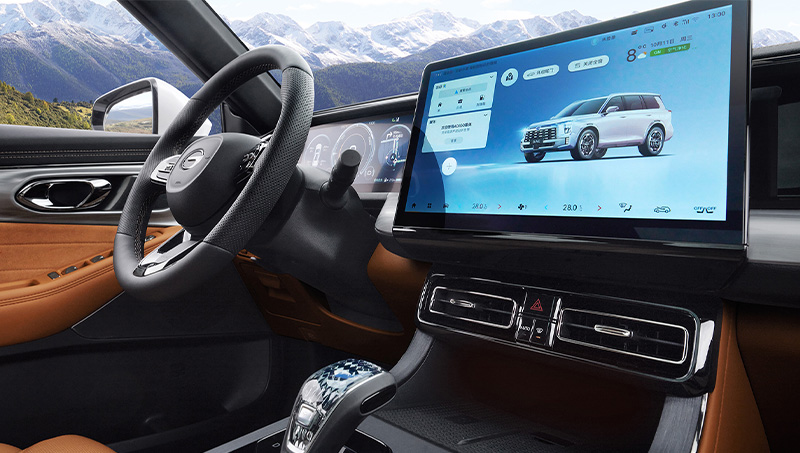
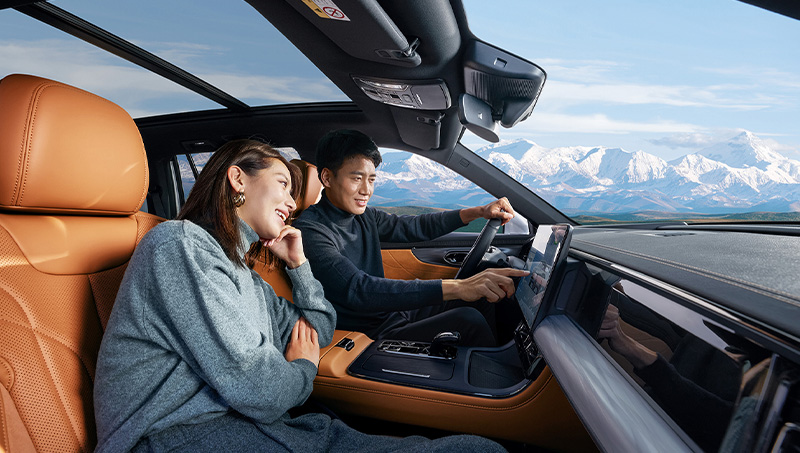
The GAC Trumpchi ES9’s interior follows a pragmatic design philosophy. A 14.6-inch floating center display and 12.3-inch digital instrument cluster are powered by a Qualcomm Snapdragon 8155 chip, ensuring responsive infotainment performance. Extensive soft-touch surfaces and eco-friendly materials create a warm, home-like ambiance. The visual aesthetic leans traditional, with virtually no learning curve for first-time users. However, owners report that the ADiGO intelligent connected system is limited in functionality, supports few third-party apps, and uses an outdated map version – perhaps the most critical weakness compared to new players.
The Li Auto L8’s dual 15.7-inch center and passenger screens represent a storm of digital sophistication. Driven by a Qualcomm Snapdragon 8295P chip enabling five-screen 3D interaction, the voice assistant and rich entertainment ecosystem transform the cabin into a family cinema, comprehensively outclassing the GAC Trumpchi ES9 in ambiance.
The gap in driver assistance capabilities is perhaps the most brutal. The GAC Trumpchi ES9 offers only basic L2-level functions (ACC, lane centering); the number of cameras and radar units means it cannot keep pace with map-free autonomous driving iterations. The Li Auto L8 comes standard with Li AD Pro or AD Max systems, offering highway NOA and more advanced driver assistance features that exert a distinctly different appeal to modern middle-class families.
The GAC Trumpchi ES9 offers both 2+2+2 six-seat and 2+3+2 seven-seat configurations. The six-seat version’s second-row captain’s chairs feature comfortable headrests and front-row “boss switches.” The third row offers sufficient space for short-to-medium trips for adult males. Folding both the second and third rows yields over 3,000 liters of cargo volume.
The Li Auto L8 also focuses on six-seat variants, though its rear refrigerator and second-row zero-gravity seats are not standard across trims. In absolute hard-core space, the two are nearly indistinguishable, but in third-row practicality, the GAC Trumpchi ES9’s slightly shorter wheelbase (2,920 mm vs. 3,005 mm) and more angular roofline put it at a disadvantage in interior longitudinal space.
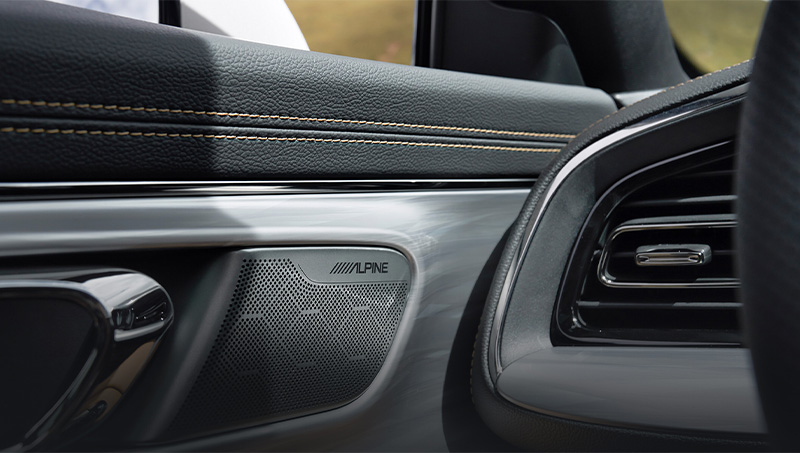
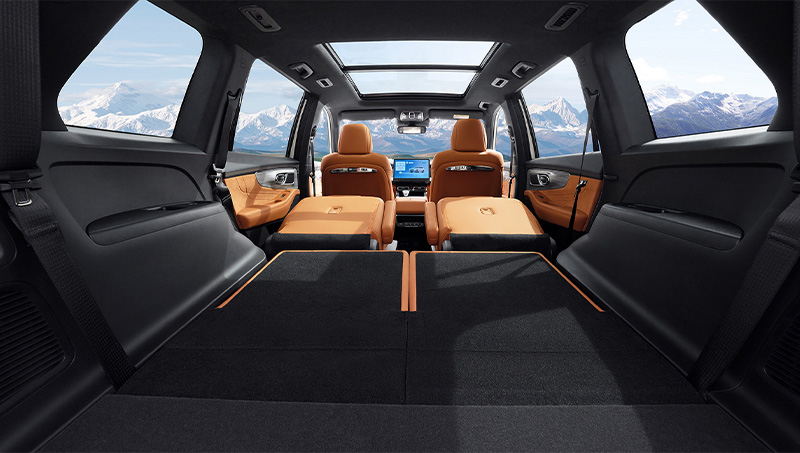
In storage design, the GAC Trumpchi ES9 features large bins beneath the door armrests and an asymmetrical storage layout in the center console area. The Li Auto L8’s “Queen’s Seat” and the under-dash open storage cubby make stowing snacks or children’s toys effortless and accessible.
1.What kind of vehicle is the GAC Trumpchi ES9?
The GAC Trumpchi ES9 is a mid-to-large plug-in hybrid SUV built on GAC’s GPMA architecture. Offering flexible 6/7-seat layouts, it combines 2.0T plug-in hybrid power, over 5 meters of length, and a starting price of 229,800 RMB, directly targeting value-conscious multi-child families.
2.What are the GAC Trumpchi ES9’s core competitive strengths?
The GAC Trumpchi ES9’s strongest advantage lies in its exceptional balance of price and practicality:
① A 2.0T plug-in hybrid + 5-meter length + 6/7 seats at the 230,000 RMB level;
② Highway direct-drive efficiency providing long-range confidence and mechanical durability;
③ Solid chassis feel and Bosch brake system;
④ GAC’s nationwide dealer and service network, offering after-sales coverage that surpasses any new entrant.
3.What are the main differences between the GAC Trumpchi ES9 and Li Auto L8, and how should buyers choose?
Powertrain: GAC Trumpchi ES9 – 2.0T plug-in hybrid, more confident highway direct-drive efficiency and low-battery fuel consumption (~6–6.6 L/100 km); Li Auto L8 – pure range extender, near-EV experience in city driving.
Smart Cabin: Li Auto L8 – Snapdragon 8295P + five-screen integration, a different dimension of cockpit experience; ES9 – functional and adequate, but lags in ecosystem and smoothness.
ADAS Capability: Li Auto L8 – highway NOA and urban navigation assistance largely standard; ES9 – only basic L2.
Passenger Space: GAC Trumpchi ES9’s third-row longitudinal space utilization falls short of the L8, but cargo flexibility and short-to-medium ride capacity are comparable.
Price Range: GAC Trumpchi ES9 has a much lower entry point (229,800 RMB vs. 321,800 RMB), offering clear value-for-money advantage.
Recommendations:
Choose the GAC Trumpchi ES9 if you prioritize mechanical robustness, spacious 6/7-seat practicality, and outstanding value – and if you do not demand advanced driver assistance.
Choose the Li Auto L8 if your family frequently uses and values advanced ADAS, cabin tech ecosystems, and near-silent, ultra-smooth powertrain behavior under all conditions – and if your budget is more flexible.
4.How is the GAC Trumpchi ES9’s low-battery fuel consumption and reliability?
Real-world highway testing shows low-battery fuel consumption of approximately 6–6.6 L/100 km. In urban driving, consumption can be even lower due to intermittent engine engagement. The 2.0T plug-in hybrid architecture provides strong reliability assurance, and the engine runs on regular 92-octane gasoline.
User Comments
904: The GAC Trumpchi ES9 looks great, drives well, and offers solid quality – the top choice for 7-seat SUVs.
80s: In city driving, the two-wheel-drive version is more than enough.
Advanced Search
Recommended Models
Geely-Galaxy-Geely Galaxy M7
Updated: May,22,2026

Mazda-Mazda EZ-60
Updated: Mar,02,2026

GAC Trumpchi-Trumpchi ES9
Updated: Feb,26,2026
Related News
A pioneering creation in the new energ...
Nov,05,2025
Geely Galaxy M9: Reshaping the Large S...
Nov,06,2025
All trims of the Tang L DM are equippe...
Nov,05,2025
What are your thoughts on this car?
* Required Fields