

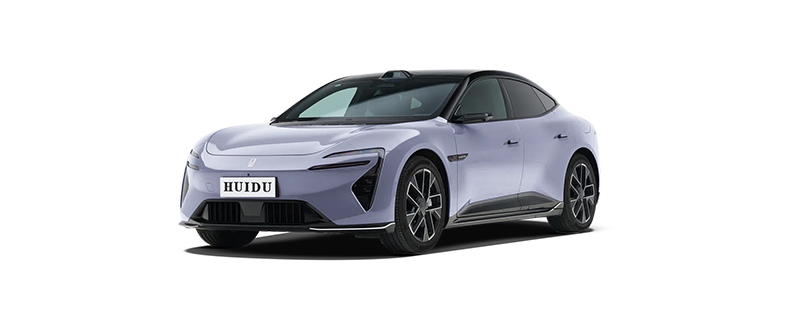
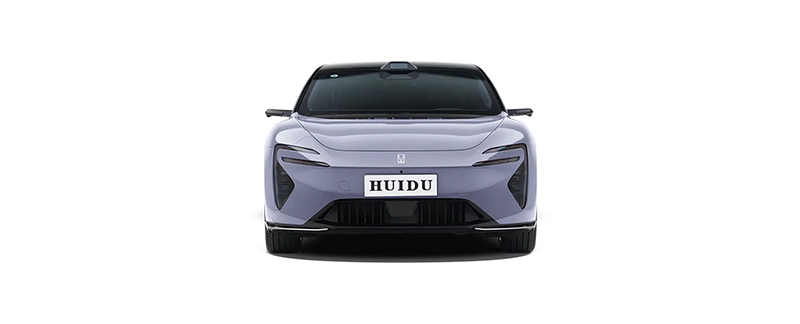
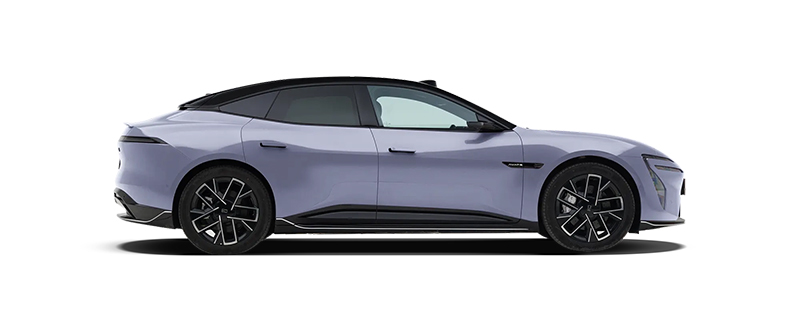
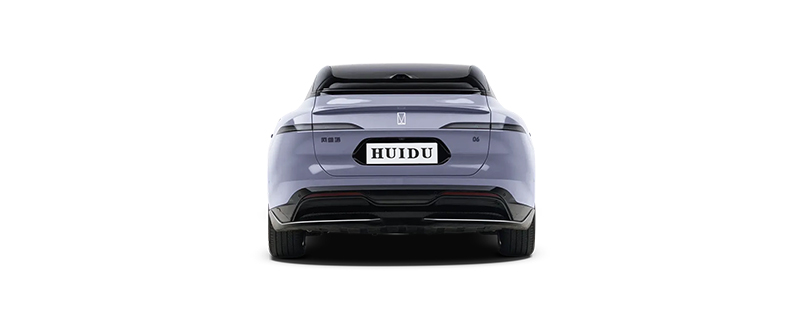
In the current 20-300,000 RMB new energy sedan market, where the Xiaomi SU7 continues to dominate with its tech ecosystem and extreme performance, the Avatr 06T enters the fray as a "smart, beautiful, all-scenario sports sedan." With its shooting brake stance, deep empowerment from Huawei's full-stack intelligence, and a dual-powertrain strategy, Avatr aims to redefine the value benchmark for intelligent sports sedans in this segment. Behind the wheel, the Avatr 06T comes standard with the Taihang distributed electric drive, available in dual-motor rear-wheel drive and triple-motor all-wheel drive versions. The pure-electric dual-motor version delivers a system maximum power of 440 kW and peak torque of 645 Nm, achieving 0-100 km/h in just 3.9 seconds. The triple-motor all-wheel drive version boasts an astonishing 0-100 km/h time of 2.78 seconds, with independent torque control enabling more stable cornering and improved safety on slippery roads. The range-extender (EREV) version is powered by a high-efficiency 1.5T dedicated range extender (1497 cc displacement), offering up to 330 km of all-electric range and a combined range exceeding 1,190 km, with a fuel consumption of just 5.36 L/100 km in low-battery conditions.
In comparison, the new-generation Xiaomi SU7 comes standard with the V6s Plus super electric motor. The base model features a 752V platform with 320 horsepower, while the Max version upgrades to an 897V platform with 690 horsepower, achieving 0-100 km/h in 3.08 seconds and a CLTC range of up to 902 km. The two vehicles share significant overlap in energy strategy and target users, but their powertrain philosophies and intelligent routes diverge sharply: the Avatr 06T, leveraging Huawei's Qiankun autonomous driving and HarmonySpace cockpit, pursues a path of "democratising technology and making premium ADAS standard across all trims." The Xiaomi SU7, by contrast, capitalises on the Xiaomi HyperOS and its Mi Ecosystem advantage, following a strategy of "ecosystem connectivity and driving-first experience."
"Before April 22, 2026, if someone told you that for less than 220,000 RMB you could buy a shooting brake coupe with a standard 896-line LiDAR, dual-motor rear-wheel drive, 5C ultra-fast charging, and the HarmonySpace cockpit, you'd probably think it was another startup's empty promise. But now, Avatr has actually delivered." — Wan Yanbo
Behind the wheel of the Avatr 06T, the "Falcon" swooping silhouette and an extreme width-to-height ratio of 1.35 give the car a supercar-like visual presence and a low centre of gravity. The steering wheel feels solid, and the steering is light yet linear. In urban conditions, the chassis features a front double wishbone and rear five-link independent suspension, with higher trims equipped with air suspension and CDC variable damping absorbers. The chassis tuning is remarkable: over fine bumps, road noise is effectively filtered out while retaining just enough feedback for the driver to sense road conditions — all information is processed gently and with restraint. Over larger bumps, the impact is absorbed smoothly without harshness, delivering both the refined of traditional luxury cars and the agile precision of a sports sedan. The engine noise is well suppressed, and the Taihang e-drive's flexible, refined torque distribution makes the Avatr 06T unexpectedly nimble.
The Xiaomi SU7 debuts the self-developed "Jiaolong" chassis, with standard front double wishbone and rear five-link independent suspension and front four-piston fixed calipers. The Pro and Max trims come standard with closed dual-chamber air suspension and CDC variable damping absorbers. In city driving, the chassis feels tauter, and the steering feedback is more direct when cornering, offering superior handling precision over the Avatr 06T. However, the filtration softness in comfort mode is slightly less refined than the 06T's premium ride quality.
The Avatr 06T's Taihang distributed e-drive can independently and precisely control left and right wheel torque, enabling more stable cornering and maintaining vehicle controllability even in extreme situations such as a tyre blowout, deeply integrating performance with safety. The moose test results are impressive — steering is precise, and rear-end tracking is excellent, allowing this shooting brake to handle corners with ease. In braking, both front and rear axles feature ventilated disc brakes, and with the Taihang e-drive's coordinated regenerative braking control, the pedal feel is linear and powerful. However, no independent third-party testing authority has yet released verified 100-0 km/h braking distance data for this model.
The Xiaomi SU7 features the self-developed "Jiaolong" chassis, with standard front double wishbone and rear five-link independent suspension plus front four-piston fixed calipers. The motor torque response is rapid, wheel speed sensing is faster, and more precise dynamic torque control significantly enhances chassis grip. Brake discs have been enlarged to 380 mm in diameter, paired with high-performance low-metallic brake pads, achieving a tested 100-0 km/h stopping distance of approximately 33.3 metres. The latest SU7 generation increases rear tyre width from 245 mm to 265 mm, improving grip by 8% and enhancing braking stability.
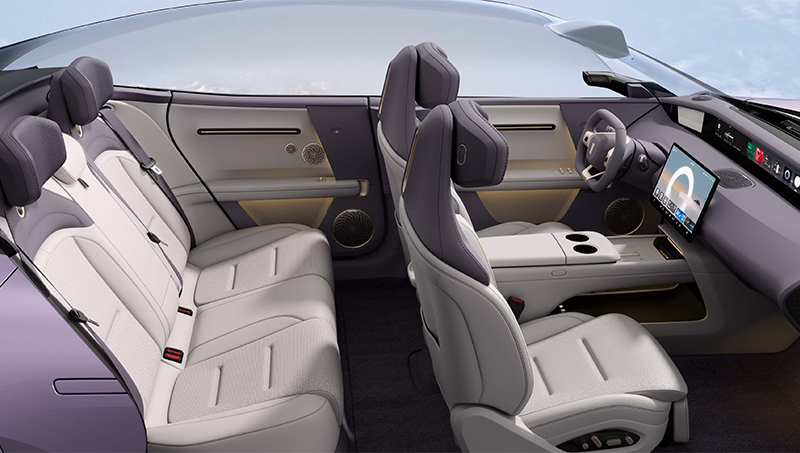
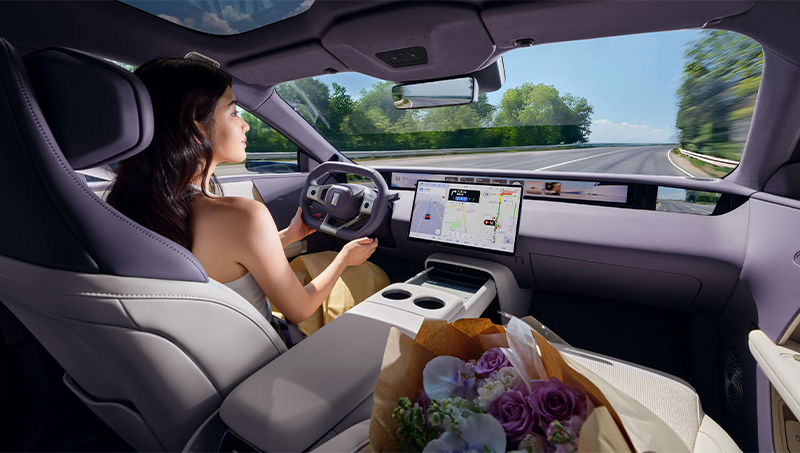
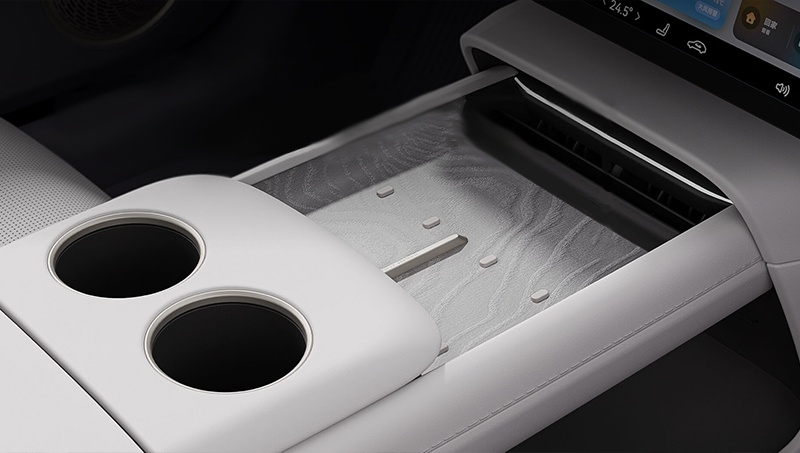
Inside the Avatr 06T, the futuristic cockpit integrates a 35.4-inch 4K Panoramic Star Ring Screen and a 15.6-inch floating centre display, powered by the HarmonySpace 5 cockpit system with the MoLA hybrid large model agent architecture, evolving from "understanding commands" to "reading the driver's mind." The Elite trim features Huawei's Limera in-cabin laser vision perception system, with 23 comprehensive active safety capabilities, supporting urban NCA pilot assistance. It can proactively anticipate road conditions and avoid hazards, significantly improving safety and convenience in complex scenarios like congestion, cut-ins, and construction zones. Dual front zero-gravity seats support 12-way electric adjustment, with heating, ventilation, and massage functions. Together with the 25-speaker Meridian sound system, they create a mobile luxury lounge. The nano-water ion air purification system releases 480 billion hydroxyl ions per second, purifying the air while providing moisturising benefits — especially appealing to families.
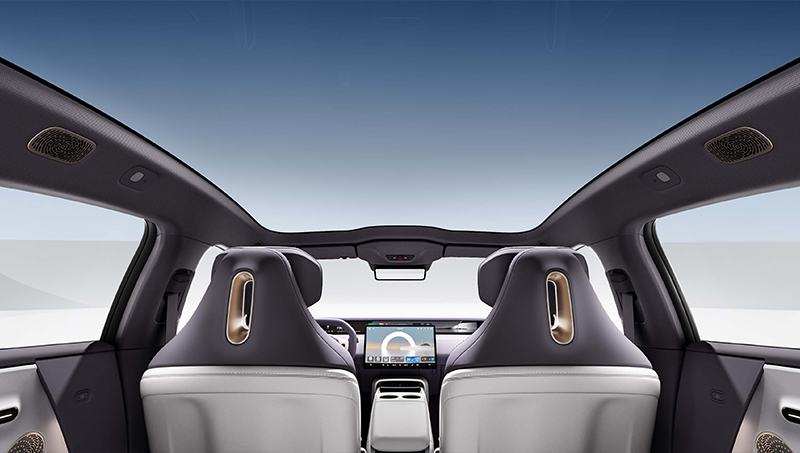
The Xiaomi SU7 is powered by the Snapdragon 8295 chip and Xiaomi HyperOS Smart Cockpit, supporting AI voice control ("Xiao Ai Classmate") and car-home connectivity, linking with over 300 smart devices. The seamless in-car ecosystem integration is its unique moat — Mi Band users can unlock the vehicle on approach and sync their phone calendars to the car for convenient trip planning. The vehicle also adds external voice interaction, four-door acoustic laminated glass, and a segmented dimming sunroof, further enhancing the ride experience.
Intelligent driving is the key differentiator between the two. The Avatr 06T comes standard with Huawei's Qiankun ADS system across all trims. The MAX and Performance versions are equipped with the world's highest mass-production specification — 896-line dual-optical-path image-grade LiDAR, previously only seen on the million-class Zunjie S800. It can reliably detect obstacles as low as 14 cm (about the height of a soda can) at 120 metres, allowing the vehicle to identify and plan avoidance routes three seconds in advance at 120 km/h. Huawei's pioneering dual-optical-path "integrated bifocal" design solves the traditional LiDAR dilemma of "wide field of view but short range, or long range but narrow field of view." The system comes standard with 27 sensors (896-line LiDAR + 11 high-definition cameras + 3 millimetre-wave radars + 12 ultrasonic radars), achieving 360-degree perception. Huawei Qiankun ADS 4.0 supports "parking space to parking space" full-scenario intelligent driving, providing a smooth, veteran-driver-like experience whether in city traffic congestion or highway automatic lane changing and overtaking.
The Xiaomi SU7 comes standard with LiDAR and 4D millimetre-wave radar, with computing power increased to 700 TOPS, featuring the upgraded Xiaomi HAD enhanced assisted driving and the Xiaomi XLA cognitive large model, significantly improving recognition capability in complex weather (e.g., low light, rain, fog) and occlusion scenarios. The ADAS functions are free for life. However, Huawei ADS still holds an advantage in urban driving maturity, with its AEB capable of effective activation at speeds up to 120 km/h — extremely rare in this price bracket.
"In the Avatr 06T's cockpit, you experience the technological convenience and intelligent singularity brought by the Harmony ecosystem. In the Xiaomi SU7, you feel the seamless connectivity and driving passion of the Mi Ecosystem." — Su Feng, Editor-in-Chief, New Era of Intelligent Driving
The Avatr 06T's shooting brake design is its core practical advantage. With exterior dimensions of 4,940 mm (length) × 1,995 mm (width) × 1,455 mm (height) and a wheelbase of 2,940 mm, it is slightly shorter (by 60 mm) than the Xiaomi SU7 (4,997 × 1,963 × 1,455 mm, wheelbase 3,000 mm). However, thanks to the shooting brake body profile, its space utilisation reaches 82%. With the rear seats folded flat, it creates a 2.15-metre-long completely flat cargo floor, offering storage capacity rivalling that of an SUV. The boot has a standard volume of 416 litres, with a wide opening that easily accommodates weekend camping gear. The 1.35 width-to-height ratio gives a low, sporty stance while still providing four fingers of rear headroom for a 1.8-metre-tall passenger, with legroom of one fist and four fingers.
The Xiaomi SU7, as a standard three-box sedan, has a longer wheelbase (3,000 mm) and ample rear legroom, but its fastback design significantly compromises rear headroom. A passenger of 1.8 metres has only three fingers of headroom, making long-distance comfort less adaptable than the more versatile shooting brake architecture. The boot volume (517 litres) exceeds that of the Avatr 06T, offering greater load capacity, but the smaller opening and height constraints make loading bulky items less convenient than the shooting brake.
1. What kind of vehicle is the Avatr 06T?
The Avatr 06T is a smart, beautiful, all-scenario sports sedan launched by Avatr Technology, targeting the 200,000–300,000 RMB intelligent sports sedan market. Its core selling points include a shooting brake design, Huawei's full-stack intelligence, dual-powertrain coverage (BEV + EREV), and standard high-level ADAS across all trims. It is aimed at young family users seeking technology and individuality.
2. What are the core competitive advantages of the Avatr 06T?
The core competitiveness lies in the combination of shooting brake styling, Huawei full-stack intelligence, and dual-powertrain coverage: (1) 4,940 mm length + 2,940 mm wheelbase + shooting brake design, achieving 82% space utilisation, combining practicality and aesthetics; (2) standard 896-line LiDAR + Huawei Qiankun ADS across all trims, supporting "parking space to parking space" full-scenario intelligent driving; (3) BEV/EREV dual-powertrain choice — BEV range up to 741 km, EREV combined range up to 1,190 km, both supporting 5C ultra-fast charging; (4) HarmonySpace 5 cockpit with natural, smooth interaction; (5) starting price of 215,900 RMB, demonstrating a sincere "fully loaded" philosophy.
3. What are the main differences between the Avatr 06T and Xiaomi SU7, and how should one choose?
Body Style: Avatr 06T — shooting brake, high space utilisation, more generous rear headroom, large boot opening; Xiaomi SU7 — three-box sedan, longer wheelbase but compromised rear headroom due to fastback design.
Powertrain: Avatr 06T offers both BEV and EREV, covering a wider range of usage scenarios; Xiaomi SU7 is BEV-only, with greater dependence on charging infrastructure.
ADAS Capabilities:Avatr 06T — standard 896-line LiDAR + Huawei Qiankun ADS, leading in urban driving maturity; Xiaomi SU7 — standard LiDAR + HAD ADAS, free for life, but urban driving capability is still catching up.
Smart Cockpit: Avatr 06T — HarmonySpace 5, integrated Huawei ecosystem experience; Xiaomi SU7 — HyperOS, seamless connectivity with Mi Ecosystem.
Price Range: The two significantly overlap (215,900–275,900 RMB vs. 219,900–303,900 RMB), with the Avatr 06T offering greater "fully loaded" value.
Choice Recommendation:
Choose the Avatr 06T if you value the shooting brake's practical space, Huawei's full-scenario intelligent driving, and the range-anxiety-free freedom of an EREV.
Choose the Xiaomi SU7 if you pursue driving dynamics, seamless integration with the Mi Ecosystem, and the appeal of a tech-trend brand leader.
Advanced Search
Recommended Models
Geely-Galaxy-Geely Galaxy M7
Updated: May,22,2026

Mazda-Mazda EZ-60
Updated: Mar,02,2026

GAC Trumpchi-Trumpchi ES9
Updated: Feb,26,2026
Related News
A pioneering creation in the new energ...
Nov,05,2025
Geely Galaxy M9: Reshaping the Large S...
Nov,06,2025
All trims of the Tang L DM are equippe...
Nov,05,2025
What are your thoughts on this car?
* Required Fields