Mazda CX-5 Review
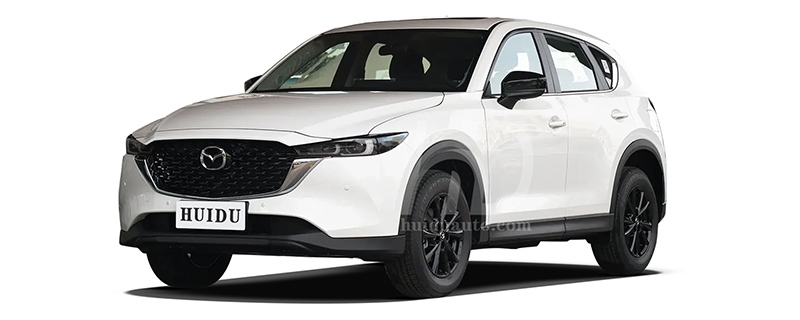
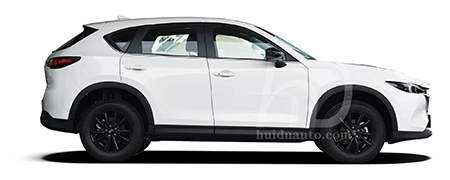
The phrase “Jinba Ittai” (literally “rider and horse as one”), originally a Japanese expression describing the seamless harmony between a rider and their steed, has evolved into Mazda’s core engineering philosophy. Guided by this principle, the Mazda CX-5 has achieved notable success in the UK market, consistently selling several thousand units annually. While this performance is certainly impressive, Mazda remains acutely aware that, in today’s fiercely competitive automotive landscape, a uniquely Japanese design ethos alone is insufficient to sustain long-term advantage. Consequently, Mazda plans ongoing and substantive product updates and enhancements for the Mazda CX-5 to ensure it maintains—and even strengthens—its competitive edge against rival compact SUVs.
But what exactly sets the Mazda CX-5 apart? Its defining strength lies in its exceptional driving dynamics. Although its grille lacks a luxury badge, the cabin’s level of refinement significantly surpasses that of most mainstream rivals in the segment.
Yet, are these qualities alone enough to secure its market position? This review delves deeply into that question, offering a comprehensive evaluation across all critical dimensions. Read on to discover how the Mazda CX-5 truly performs…
In terms of powertrain strategy, Mazda has deliberately eschewed the industry-wide shift toward turbocharging. As a result, while the Mazda CX-5’s base 2.0-litre e-Skyactiv-G mild-hybrid petrol engine—producing 162 hp—technically outperforms rivals like the Nissan Qashqai (158 hp) on paper, drivers must press deeper into the throttle to achieve satisfying acceleration. Its low-end torque delivery falls short of turbocharged competitors, resulting in slightly less responsive performance and necessitating more frequent downshifts to keep pace with traffic flow. Nevertheless, the engine’s smoothness and linear power delivery continue to earn widespread praise.
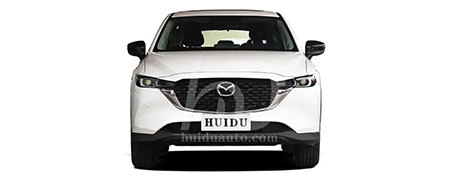
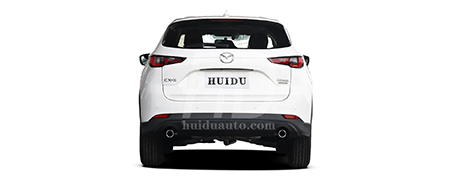
The more powerful 2.5-litre e-Skyactiv-G mild-hybrid unit (191 hp) doesn’t deliver a dramatically quicker real-world acceleration feel, but it comes standard with a swift-shifting automatic transmission that minimizes intrusive gear changes and includes all-wheel drive as standard.
Additionally, a 2.2-litre Skyactiv-D diesel engine (182 hp) is available. It offers stronger low-end pull from around 1,500 rpm, maintaining robust output all the way to the redline (0–62 mph in 9.3 seconds for the manual variant).
Chassis-wise, the Mazda CX-5 features a relatively firm suspension setup. This means sharper road imperfections can occasionally transmit noticeable jolts into the cabin. However, the trade-off is commendable body control: the vehicle remains composed over larger undulations, with well-managed pitch and dive. For optimal ride comfort, we recommend the entry-level Centre-Line trim with its 17-inch alloy wheels, rather than the larger 19-inch rims found on higher grades.
This taut suspension tuning also pays dividends in handling. The Mazda CX-5 exhibits notably restrained body roll through corners. Steering is precise, well-weighted, and impressively responsive—exceeding expectations for a vehicle of this size and bolstering driver confidence. A minor caveat is that modest tire grip can sometimes limit enthusiasm for exploring the car’s dynamic limits, leaving its cornering stability slightly behind that of certain class rivals.
Noise insulation is another strong suit. Road and engine noise are both effectively suppressed. The diesel engine sounds slightly gruff at low revs but quickly smooths out and remains refined even under hard acceleration. The braking system inspires confidence, with a linear, progressive pedal feel that enables smooth, controlled stops.
The standard six-speed manual gearbox delivers an engaging driving experience—shifts are accurate and sporty, reminiscent of a simplified version of the excellent unit found in the MX-5. The automatic transmission (standard on the 2.5-litre petrol and optional on the other engines) is equally smooth in operation.
Ergonomically, the Mazda CX-5 caters well to drivers who prefer a higher seating position, offering an expansive view of the road ahead. The driver’s seat comes standard with multi-way adjustment—including lumbar support—and provides ample lateral bolstering to keep occupants securely positioned during cornering. Manual adjustment is standard on the Centre-Line; higher trims upgrade to power adjustment. The steering wheel offers tilt, telescopic, and rake adjustability.
Inside, the cabin prioritizes usability: all controls are intuitively placed within easy reach. Notably, Mazda retains physical buttons and rotary dials instead of relying on touchscreens—a clear advantage for safe, eyes-on-the-road operation. While the climate control panel sits slightly low on the centre stack, direct temperature adjustments via tactile knobs remain straightforward.
Forward visibility benefits from slender A-pillars and the elevated driving position, making it easy to judge the vehicle’s front end and monitor junctions. Rearward visibility is somewhat compromised by thick C-pillars, though the large rear window still ensures adequate sightlines. Front and rear parking sensors are standard across the range. The Exclusive-Line trim adds a reversing camera, while the top-tier Takumi model features a 360-degree surround-view system with bird’s-eye functionality.
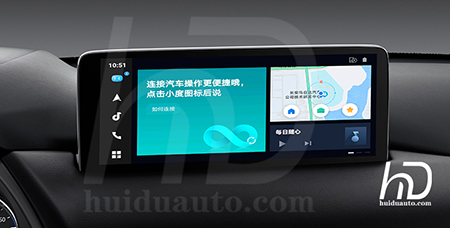
All Mazda CX-5 models come equipped with a 10.3-inch infotainment display, supporting DAB radio, Bluetooth, Android Auto, Apple CarPlay, and built-in navigation. From the Exclusive-Line grade upward, the audio system upgrades from six speakers to a 10-speaker Bose setup—though sound clarity and overall fidelity could still be improved.
Opinions on the infotainment interface may vary: some will appreciate its clean, minimalist layout, while others may find it visually understated. The monochromatic theme lacks vibrancy, and screen resolution isn’t class-leading. However, its strength lies in clear information hierarchy and intuitive menu logic, navigable via a console-mounted control dial—a far safer and less distracting alternative to touchscreen-only systems used by many competitors.
Interior quality is a standout feature. Soft-touch materials dominate surfaces within sight and reach, while harder plastics are discreetly reserved for lower, less visible areas. Thoughtful material combinations—such as leather-wrapped lower dash panels and, on the Takumi, elegant wood or metallic trim accents—create a cohesive and upscale ambiance.
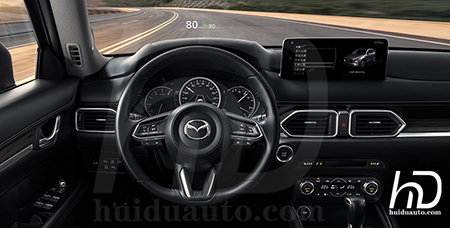
Front-seat space matches that of key rivals in the compact SUV segment. Even taller occupants enjoy generous headroom, legroom, and shoulder room, ensuring long-distance comfort.
Storage solutions are practical: deep door bins, a sizable under-armrest compartment (with wireless phone charging from Exclusive-Line onward), a capacious glovebox, and two central cupholders capable of securely holding large travel mugs.
Rear passenger space is equally accommodating. Two adults around 6 feet tall (1.83 m) will find ample head and knee room—even with the front seats set high. While a panoramic sunroof on higher trims slightly reduces head clearance, the middle rear seat still offers sufficient overhead space. Accommodating three adults abreast is snug but feasible, and still better than some rivals like the Renault Symbioz. Rear seatbacks offer two-stage recline, though the range of adjustment provides only marginal comfort gains. The seats do not slide fore/aft, limiting configurability.
Folding the rear seats is effortless: pull levers in the boot automatically drop the seatbacks. The 40/20/40 split-fold design (rather than the more common 60/40) offers greater cargo-passenger flexibility.
Luggage capacity stands at 522 litres for petrol models and 510 litres for diesel variants (due to a larger fuel tank). In practice, we managed to fit eight carry-on suitcases in the boot—easily accommodating two full-size strollers. With the rear seats fully folded, the load floor becomes nearly flat and uninterrupted, forming a vast, usable space. Though the boot floor height isn’t adjustable, a large underfloor storage compartment and two useful bins behind the rear wheel arches enhance utility. The load lip aligns almost flush with the tailgate opening, simplifying the loading of heavy items.
Among powertrain options, the base petrol engine offers the most accessible pricing and respectable fuel economy, making it our recommendation for private buyers with moderate annual mileage. Those covering higher distances and prioritizing maximum efficiency should consider the 2.2-litre diesel—the most frugal variant in the lineup. Note that the 2.5-litre petrol is the least fuel-efficient option.
Regardless of engine choice, the Mazda CX-5 arrives well-equipped. We therefore endorse the entry-level Centre-Line trim, which balances affordability with essential features including adaptive cruise control, dual-zone climate control, automatic headlights, comprehensive parking aids, alloy wheels, and a full infotainment suite. The Newground variant adds rugged exterior styling cues and 19-inch wheels, plus a reversible rubber boot mat—but offers minimal functional upgrades.
The Exclusive-Line focuses on luxury, adding heated leather seats, a heated steering wheel, keyless entry, a powered tailgate, and a head-up display. Safety is comprehensive across the range, featuring autonomous emergency braking (AEB), stability control, six airbags, lane-keep assist, blind-spot monitoring, and rear cross-traffic alert. The Mazda CX-5 earned a five-star Euro NCAP safety rating in 2017—the highest possible at the time. While this rating is now outdated under today’s stricter protocols, the vehicle’s fundamental crash protection capabilities remain robust.
Finally, the advanced driver assistance package is optional on the Exclusive-Line and standard on the Takumi. While not essential, it includes a valuable Driver Attention Alert system—a worthwhile addition for enhanced safety.
Frequently Asked Questions:
1.Why does the Mazda CX-5 have such a large A-pillar blind spot, and how can drivers safely manage it during turns?
The Mazda CX-5’s relatively wide A-pillars do create a noticeable blind spot—a deliberate trade-off between structural rigidity, crash safety, and outward visibility. To mitigate this, drivers are advised to adjust seating position for optimal sightlines, perform shoulder checks before turning, and make full use of the standard blind-spot monitoring system where equipped.
2.Is the loud engine noise during cold starts a sign of malfunction? How can it be addressed?
No, this is not a fault. The pronounced engine sound during cold starts—particularly noticeable in Skyactiv-G engines—is entirely normal. It stems from the engine’s high compression ratio and lean-burn combustion strategy, which prioritize efficiency and responsiveness. The noise typically subsides within seconds as the engine reaches operating temperature.
3.Is the Mazda CX-5 expensive to maintain? What are the standard service intervals and typical maintenance items?
Maintenance costs for the Mazda CX-5 are moderate among mainstream compact SUVs—slightly higher than those of some Japanese rivals but significantly lower than premium-brand alternatives. Routine servicing generally follows a 10,000-mile (or 12-month) interval and includes oil and filter changes, cabin air filter replacement, brake inspections, and tire rotation. Mazda’s recommended maintenance schedule ensures long-term reliability without imposing undue ownership costs.