BYD Seal 06 Review

As BYD’s first-ever station wagon, the new BYD Seal 06 Touring DM-i departs from the brand’s typical all-electric strategy by adopting a plug-in hybrid (PHEV) powertrain. Built on a technical platform closely related to the Seal U DM-i SUV, the model aims to blend practicality with efficiency.
According to official specifications, the vehicle offers compelling all-electric range and equipment levels. Combined with the inherent utility of the wagon body style, the BYD Seal 06 Touring DM-i is poised to become a significant contender in its segment—provided its final pricing aligns with market expectations. That said, its overall competitiveness will ultimately depend on real-world validation.
The BYD Seal 06 Touring DM-i is offered in two PHEV variants, both pairing a 1.5-liter gasoline engine with an electric motor. The entry-level Boost version delivers a combined output of 181 hp, accelerating from 0–100 km/h in 8.9 seconds, and features a 10 kWh battery. This yields an all-electric range of 31 miles (50 km) for the wagon and 34 miles (55 km) for the sedan variant.
The higher-spec Comfort trim upgrades to a 19 kWh battery, extending the pure-electric range to a more practical 62 miles (100 km) for the wagon (65 miles / 105 km for the sedan). Power output increases to 209 hp, reducing the 0–100 km/h sprint time to 8.5 seconds. However, in everyday driving, the performance difference between the two variants remains subtle. Notably, aggressive acceleration can induce front-wheel slip—a minor dynamic shortcoming.
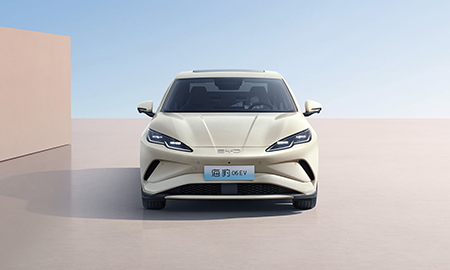
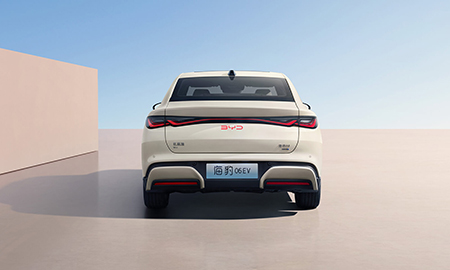
Both powertrains are well-suited for urban and highway driving. The vehicle prioritizes electric propulsion under most conditions, with the gasoline engine engaging primarily during high-speed cruising or hard acceleration. While responsive, the electric motor lacks the instantaneous torque delivery found in rivals like BMW.
In terms of ride and refinement, cabin noise insulation leaves room for improvement. Tire roar is particularly pronounced—often overshadowing engine noise. Under full throttle, the engine maintains high revs with an acoustic character reminiscent of conventional CVT-equipped vehicles. Suspension noises are also perceptible to occupants, especially in the wagon variant, which exhibits noticeably higher interior noise levels than the sedan.
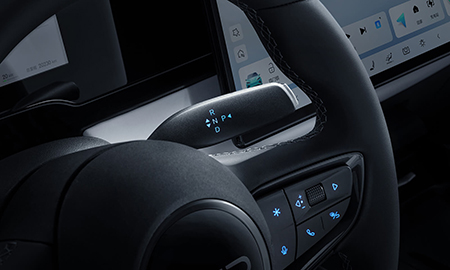
All BYD Seal 06 models come standard with an 8.8-inch fully digital instrument cluster. Though information-dense and slightly cluttered due to extensive digital readouts and icons, it suffers minimal obstruction from the steering wheel.
The infotainment system employs a touchscreen interface across the board. The Boost trim features a 12.8-inch landscape-oriented display with sharp visuals and responsive touch controls. However, the small size of shortcut icons at the screen’s bottom makes them difficult to operate while driving. Climate adjustments support a convenient three-finger gesture system (vertical swipe for temperature, horizontal for fan speed), though physical buttons would better suit frequent adjustments.
The Comfort trim upgrades to a 15.6-inch rotating touchscreen, capable of switching between portrait and landscape orientations. Yet, since smartphone mirroring functions only in landscape mode, the rotation feature serves more as a signature design element than a functional necessity.
Interior quality is a strong point. Soft-touch materials cover frequently contacted surfaces—including the dashboard, door panels, and center console—and precise assembly contributes to a premium feel that rivals vehicles in higher segments.
Front-seat space is generous, complemented by ample storage compartments for daily essentials. Rear legroom is equally spacious, accommodating even taller adults comfortably. The nearly flat rear floor enhances middle-passenger comfort, though foot space becomes slightly constrained when front seats are set to their lowest position.
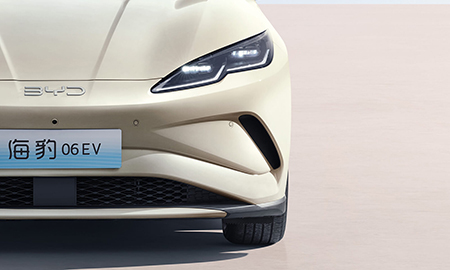
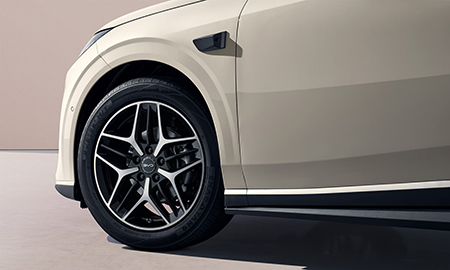
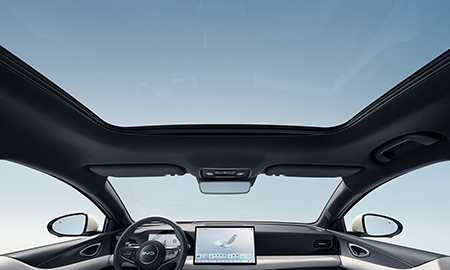
Headroom varies by body style: in the sedan, the sloping roofline limits clearance for passengers around 1.83 m (6 ft) tall, while the wagon offers marginally more space. The Comfort trim’s panoramic sunroof slightly reduces roof height, but its thoughtful placement minimizes perceived intrusion when occupants rest against head restraints.
A notable drawback is the lack of rear seat adjustability—the backrest angle and seat position are fixed. Additionally, the low seat cushion provides insufficient thigh support, often resulting in a knees-up posture for some passengers.
Luggage capacity favors the Touring wagon, which offers 500 liters beneath the load floor (plus an additional 175 liters above it). The wide tailgate opening facilitates easy loading, and the adjustable-height cargo floor—when raised—nearly eliminates the loading lip (though the actual step difference between positions is modest). The 60/40-split rear seats fold via levers located in the trunk or on the seatbacks, revealing a maximum volume of 1,535 liters. For context, the Toyota Corolla Touring Sports offers greater cargo capacity.
The sedan provides 491 liters of trunk space—comparable in volume but less practical due to a significantly narrower aperture. It also features 60/40-split folding seats, though its cargo floor is fixed.
“Flat floors in the rear are common in electric cars, but less so in plug-in hybrids – so I think it’s great the Seal 6 offers just that, helping with footspace if you have three people sat in the back” – Stuart Milne, Digital editor
The BYD Seal 06’s core appeal lies in its aggressive pricing. The Boost sedan is among the most affordable PHEVs currently available, with no direct price competitor in its class. The wagon commands only a modest premium and remains substantially cheaper than mainstream rivals like the Corolla Touring Sports. The Comfort trim, while pricier, justifies its cost with double the electric range and a richer standard specification.
Even the base Boost model includes vegan leather upholstery, 6-way power-adjustable driver’s seat, a 12.8-inch touchscreen, four USB ports, and adaptive cruise control. The Comfort trim adds a 15.6-inch rotating display, panoramic sunroof, heated steering wheel, multi-color ambient lighting, wireless charging, 18-inch alloy wheels, an 8-speaker audio system (vs. 6 in the Boost), and a 360-degree camera system.
Safety-wise, the entire lineup comes standard with a comprehensive suite of advanced driver-assistance systems (ADAS).Charging capabilities differ by trim: only the Comfort and higher trims support CCS DC fast charging. The Boost model is limited to AC charging at up to 7 kW. According to BYD, the Comfort variant can recharge from 30% to 80% in approximately 23 minutes using a 26 kW DC charger under ideal conditions. While this enhances public charging convenience, its charging speed is not class-leading.
Notably, all variants include Vehicle-to-Load (V2L) functionality, enabling owners to power external devices via an adapter plugged into the charging port—an increasingly valuable feature for outdoor or emergency use.
Frequently Asked Questions
1.What are the prices of the BYD Seal 06 in domestic and international markets?
Pricing varies significantly depending on the market and trim level. In China, the vehicle is positioned as a plug-in hybrid sedan in the RMB 120,000–150,000 segment. In Malaysia, the all-electric Seal EV starts at approximately RM 100,000. In Germany, the DM-i plug-in hybrid variant has a starting price of around €42,990. For precise pricing, please consult local authorized dealers.
2.What is the real-world driving range?
Official figures (e.g., NEDC or WLTP) are obtained under ideal laboratory conditions. Actual driving range is typically 80% to 90% of the stated value, depending on driving style, weather, road conditions, and other factors. Third-party media road tests offer more realistic benchmarks for daily use.
3.How should one choose between the all-electric (EV) and plug-in hybrid (DM-i) versions?
The all-electric (EV) model is best suited for urban commuters with convenient access to charging infrastructure. The plug-in hybrid (DM-i) version eliminates range anxiety—operating as an electric vehicle when charging is available and seamlessly switching to hybrid mode for longer journeys—making it more versatile for a wider range of driving scenarios.
For copyright-related inquiries, please contact us.Partial content is sourced from What Car?.